Showing posts with label Genre. Show all posts

Friday, February 17, 2023

The End - More Than Meets the Eye

More than meets the eye...

Alice Through the Looking Glass (2016) Wallpaper


Some of you may realize that we are approaching the end of an era: Pluto transiting in the sign of Capricorn. In a few short weeks, the most distant planet in our solar system (in astrology, Pluto is very much considered one of the major planets) will transit into the sign of Aquarius for the first time in 245 years. We can say, it's the end of an era, but in truth, it is the beginning of a new one. Just like in all stories, the end marks a fresh start. It's something to celebrate!

Welcome to the first in the 2023 series - More Than Meets the Eye


Over the course of the year, I will explore how this above statement may be true in fiction, through characters' motives and expectations, plot twists, styles and genres, writing and publishing trends, deeper psychological treasures buried within books we love and today, a look under the surface of endings.

I hope you will join me on this journey of discovery wherever it might lead.

Endings or Beginnings?

Some of these ideas and examples are taken from my 2018 post titled The End is Near.

Endings can be more than meets the eye, for multiple reasons. They have to measure up to a certain level of expectation for the genre or be criticized if they do not. They also need some level of acceptance and appreciation if the book is to be remembered in a positive light. You'd think that after 400 + pages of story, readers would consider the whole experience, but no. They walk away from the book, (TV series, play or movie,) thinking of those last moments constituting the end. They might be left pondering, cheering, crying or sneering, but The End is what often sticks with us.

For an author, a good ending means readers feel satisfied, even if profoundly sad or disturbed. They hope that they will talk about the book, passing on its intrigue by word of mouth. 

A bad ending is one where readers feel cheated, let down or worse, unmoved. They don't talk about the book or lend it to a friend. They don't even bother to throw it at the wall. It's that much of a non-event.
What Makes a Good Ending?


Feelings. Emotions. Whether comedic, tragic or fantastic, the ending needs to make readers feel. It can come out of left field at the time, but there has to be, on reflection, a sense of logic, of possibility. Good authors will seed the ending in ways readers won't see coming but later they find it makes sense. That is the perfect 'more than meets the eye' ending.


Which Kind?


There are many types of endings and some of them are tethered to a genre. Romance novels, paranormal or otherwise, have a HEA (happy ever after). Thrillers require an unsettling twist (Gone Girl). Fantasy may end with everyone receiving a medal (Star Wars) or with the goal reached, but with varying degrees of fallout (LOTR).

YA Lit is changing the rules. In the past, 'happy and optimistic' endings were considered the norm. Yet, the most important ingredient in a good ending is its honesty. It may come as a shock, but it needs to ring true to the story. I remember being disturbed by the ending in The Forest of Hands and Teeth. I didn't like it, but it felt right. 

An Eclectic Group of Endings 


Some endings lines summarize; others stun. Some come full circle. Some hang us off a cliff until the next in the series; others leave us guessing. Here's a mix of some of my favourites.

"Then she bade the white horse take her through the door, leaving the snow to close in behind them and winter to obliterate any trace of her passing. - The Heir of Night, Helen Lowe

"Later on he will understand how some men so loved her, that they did dare much for her sake." - Dracula, Bram Stoker


"He was soon borne away by the waves and lost in darkness and distance." - Frankenstein, Mary Shelley

"Are there any questions?" - The Handmaid's Tale, Margaret Atwood

"She looked down and for an instant it seemed she held a ragged teddy, torn and chewed with one button eye missing, but when she blinked she saw it was only Teg’s fingers laced in her own." - Journey by NightKim Falconer


"She opened the door wide and let him into her life again." - The Girl Who Kicked the Hornet’s Nest, Stieg Larsson

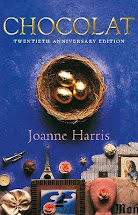
She closes her eyes again and I begin to sing softly:
'''V'la l'bon vent, v'la l'joli vent
V'la l'bon vent, ma mie m'appelle.'''
Hoping that this time it will remain a lullaby. That this time the wind will not hear. That this time - please just this once - it will leave without us." - Chocolat, Joanne Harris

"And then we continued blissfully into this small but perfect piece of our forever." - Breaking Dawn, Stephenie Meyer

"When they finally did dare it, at first with stolen glances then candid ones, they had to smile. They were uncommonly proud. For the first time they had done something out of Love." - Perfume: The Story of a Murderer, Patrick Süskind

"Hector turns and sees me and the world around us disappears. - The November Girl, Lydia Kang


How about you? I'd love to hear your most liked, or disliked endings.

xxKim

Posts in the 'More Than Meets the Eye' Series

Book Titles

The End

Backstory

Environment

Styling Characters

Desire


***

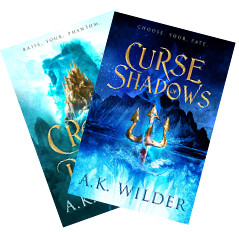
Kim Falconer, currently writing as A K Wilder, has released Crown of Bones, a YA Epic Fantasy with Curse of Shadows as book 2 in the series.

Kim can be found on  AKWilder TwitterFacebook and Instagram

Throw the bones, read your horoscopes or Raise Your Phantom on the AKWilder.com site 

Friday, March 16, 2018

Creative Instincts

Avatar directed by James Cameron

Perfecter and Innovator 
Perfecter
While on a little break - think 10 minutes of flipping through Instagram and checking FB/Tweets - I came across this theory of three creative types. It reminded me of Amanda Arista's Know Thyself and thy brain wiring post and made me wonder what type I was. The theory is simple: We instinctively approach creativity in three general ways.

1. Perfecter — An artist/writer who and maximizes what is, elevating it to the best it can be (think Bach, Mozart, Brahms, Spielberg, James Cameron, Stephen King, Tolkien, Pixar, Disney...)


Innovator
Laini Taylor - Perfecter
2. Innovator — An artist/writer who breaks the mold, pioneering a new style (as in Beethoven, Schoenberg, Kubrick, Picasso, Joyce, Dalí, Le Guin...)

3. Synthesizer — An artist/writer who draws from disparate sources, makes unexpected connections, to create something  new (e.g. Ligeti, Stravinsky, David Lynch, Tarantino, Murakami, Adams...)


Perfecter & Synthesizer
Synthesizer & Innovator
It's interesting to think of the creative process this way,  as an instinctual approach, and I suspect, after pouring through many films and titles, that writers are not one or the other. Like all things involving art, there is a certain blending. 

Categorizing is also dependent on the times. Kill Bill was break-out in 2003. Kubrick's 2001: a Space Odyssey blew minds in 1968. And, back in 1870, Jules Verne altered the course of history with 20,000 Leagues Under the Sea. As said by FP Walter:

"... this book has been a source of fascination, surely one of the most influential novels ever written, an inspiration for such scientists and discoverers as engineer Simon Lake, oceanographer William Beebe, polar traveller Sir Ernest Shackleton. Likewise, Dr. Robert D. Ballard, finder of the sunken Titanic, confesses that this was his favourite book as a teenager, and Cousteau himself, most renowned of marine explorers, called it his shipboard bible." 


Kim Wilkens as Synthesizer
China Mieville's 'New Weird' fiction is a genre blender, a synthesizer mixed with innovation and traditional representation. Michael Moorcock explains:

Neil Gaiman as Innovator
Miéville identifies with the “New Weird” movement, a development of what used to be known as “science fantasy” – a blend of the occult and scientific speculation... The New Weird, at its best, combines the virtues of visionary fiction and horror fiction, political satire, literary fiction and even historical fiction

Helen Lowe's Wall of Night series reads perfecter to me, elevating but also synthesizer with the feel of more contemporary themes and subtext. 

When I think about my process writing the Quantum Enchantment Series, I relate most to Synthesizer. It's a been called Science Fantasty blend. With The Blood in the Beginning, I align more with Perfecter, taking what I love most about the Urban Fantasy genre and giving it new wings (or make that fins). My YA Fantasy, The Bone Throwers, out September 2018 under the pen name AK Wilder, if anything, it might be innovation. My instincts were to bring together a traditional coming of age with a premise never seen before. We'll see when the jury (the readers) verdict is in.

How about you? I'd love to hear from other Sup authors and readers about their process and their favorite creative works. Films? Books? Plays? What's blown your mind recently?

xxKim

Kim Falconer's latest release comes out in 2018 The Bone Throwers, book one in the Amassia series, writing as A K Wilder. Find her new page on Facebook - AKWilder Author and on Twitter as AKWilder.

Her latest novel is out now - The Blood in the Beginning - and Ava Sykes Novel.

Learn more about Kim on Facebook and chat with her on Twitter. Check out her pen name, @a.k.wilder on Instagram, or visitAKWilder on FB and website.

Kim also runs GoodVibeAstrology.com where she teaches the law of attraction and astrology. 

Kim posts here at the Supernatural Underground on the 16th of every month, hosts Save the Day Writer's Community on FB and posts a daily astrology weather report on Facebook. 

Friday, February 16, 2018

A Hero's Journey - Ursula Le Guin

 “People who deny the existence of dragons are often eaten by dragons. From within.” - Ursula K. Le Guin. Image by David Lupton. 
On January 22, Ursula K Le Guin passed away. It felt to me like the library at Alexandria burned to the ground. The only thing that helps is knowing I can read and reread her books for the rest of my life.  She has taken so many of us on a hero's journey, and lived her life as nothing less.

Photo by Eileen Gunn

“We read books to find out who we are. What other people, real or imaginary, do and think and feel... is an essential guide to our understanding of what we ourselves are and may become.”
― Ursula K. Le Guin

Le Guin inspired millions of readers and writers, not only with her magical storytelling but her 'revolutionary' ideas. She blasted through genre and gender biases at a time when few women wrote speculative fiction (save under a nom de plume) and speculative fiction was not considered remotely worthy of literary recognition. Le Guin, with a handful of other writers, changed all that.

"There are very real differences between science fiction and realistic fiction, between horror and fantasy, between romance and mystery. Differences in writing them, in reading them, in criticizing them. Vive les différences! They’re what gives each genre its singular flavor and savor, its particular interest for the reader — and the writer.


But when the characteristics of a genre are controlled, systematized, and insisted upon by publishers, or editors, or critics, they become limitations rather than possibilities. Salability, repeatability, expectability replace quality. A literary form degenerates into a formula. Hack writers get into the baloney factory production line, Hollywood devours and regurgitates the baloney, and the genre soon is judged by its lowest common denominator…. And we have the situation as it was from the 1940’s to the turn of the century: “genre” used not as a useful descriptor, but as a negative judgment, a dismissal." - Ursala Le Guin in conversation with Michael Cunningham

"I felt obliged for so many years to protest, to rant about those distinctions — genuine and useful ones — being misused as value-judgments. Now the judgmentalism is dropping out of them, and that’s great. I don’t have to worry, I don’t have to rant. Whew!"


When I first read the Earthsea books as a child, my eyes opened to new possibilities, a future where I could aspire to write. Living that future now is a privilege I wouldn't be experiencing without Ursula Le Guin and other authors who helped along the way.

She set so many examples. One was for dealing with rejections - how not to give up. Her words and advice kept me from crumpling at those first checks. You can read a rejection letter she received from an unnamed publisher for her submission of The Left Hand of Darkness. Enlightening!

“Light is the left hand of darkness
and darkness the right hand of light.
Two are one, life and death, lying
together like lovers in kemmer,
like hands joined together,
like the end and the way.”
― Ursula K. Le Guin, The Left Hand of Darkness 

Who remembers the wonderful film, The Jane Austen book club? The character Grigg, played by Hugh Dancy, is open to reading Austen. He doesn't care if it's a 'girly' genre or old. He's interested. Curious. But when he tries to share his love for SF and Fantasy with Jocelyn, Maria Bello's character, she scoffs at him, even though she'd never read any herself. He asks if she's heard of Ursula Le Guin. "What a wonderful writer she is," he says. Eventually, Jocelyn tries out this genre author and falls in love... with both Grigg and Le Guin!

Maria Bello and Hugh Dancy in The Jane Austen Book Club
The year the film came out, 2007, Powers was published, a young adult novel that follows the adventures of a runaway slave with amazing powers of memory. The book won Le Guin her sixth Nebula award for best novel. She was shortlisted with Terry Pratchett for Making Money, Cory Doctorow for Little Brother and Ian McDonald for Brasyl. You can read more about her achievements here.

“Only in silence the word,
Only in dark the light,
Only in dying life:
Bright the hawk's flight
On the empty sky.
—The Creation of Éa” ― Ursula K. Le Guin

“It is good to have an end to journey toward; but it is the journey that matters, in the end.”

― Ursula K. Le Guin, The Left Hand of Darkness 

Read more on Ursula K. Le Guin, 1929 – 2018 at Helen Lowe's Blog, and please feel free to share your thoughts in the comments.

Journey well, Ursula Ursula Kroeber Le Guin.
xxKim

Kim Falconer's latest release comes out in 2018 The Bone Throwers, book one in the Amassia series, writing as A K Wilder. Find her new page on Facebook - AKWilder Author and on Twitter as AKWilder.

Her latest novel is out now - The Blood in the Beginning - and Ava Sykes Novel.

Learn more about Kim on Facebook and chat with her on Twitter. Check out her pen name, @a.k.wilder on Instagram, or visitAKWilder on FB and website.

Kim also runs GoodVibeAstrology.com where she teaches the law of attraction and astrology. 

Kim posts here at the Supernatural Underground on the 16th of every month, hosts Save the Day Writer's Community on FB and posts a daily astrology weather report on Facebook. 

Tuesday, January 16, 2018

The End is Near


Happy New Year! In my first post of 2018 I'm writing about endings. Crazy, I know, but what can I do? Endings are important to a writer, and not just to nail the book. It's also thrilling to come to that last scene, in the last chapter and say, Done.


Do we Judge Books by their Endings?


After 400 pages of story, you'd think readers would consider the whole experience, but no. They walk away from the book, TV series, play or movie, thinking of how it ended. They might be left pondering, cheering, crying or disappointed, but The End is what sticks.

For an author, a good ending means readers feel satisfied, even if profoundly sad or disturbed. They talk about the book, passing on its greatness by word of mouth. A bad ending is one where readers feel cheated, let down or worse, unmoved. They don't talk about the book or lend it to a friend. They throw it at the wall, eventually picking it up and putting it in the trash.

What Makes a Good Ending?


Feelings. Emotions. Whether comedic, tragic or fantastic, the ending needs to make readers feel deeply. It can come out of left field at the time, but there has to be, on reflection, a sense of logic, of possibility. Good authors will seed the ending in ways readers won't see it coming but later they find the rationale.

There are many types of endings and some of them are tethered to a genre. Romance novels, paranormal or otherwise, have an HEA (happy ever after). Trillers require an unsettling twist (Gone Girl). Fantasy may end with everyone receives a medal (Star Wars) or with the goal reached, but with varying degrees of fallout (LOTR).

YA Lit is changing but in the past 'happy and optimistic' endings were considered the norm. Yet, the most important ingredient in a good ending is its honesty. It may come as a shock, but it needs to ring true to the story. I remember being disturbed by the ending in The Forest of Hands and Teeth. I didn't like it, but it felt right. See below for changing perspectives in children's literature.

The fact that texts for children express hope, and therefore typically have happy endings, raises a question about their accuracy and honesty. - Perry Nodelman and Mavis Reimer‘s The Pleasures of Children’s Literature,

An Eclectic Group of Endings that Work for me

Some endings summerize; others shock. Some come full circle. Some hang us off a cliff until the next in the series; others leave us guessing. Here's a mix of some of my favorites.

"Then she bade the white horse take her through the door, leaving the snow to close in behind them and winter to obliterate any trace of her passing. - The Heir of Night, Helen Lowe

"Later on he will understand how some men so loved her, that they did dare much for her sake." - Dracula, Bram Stoker

"The scar had not pained Harry for nineteen years. All was well." - Harry Potter and the Deathly Hallows, J.K. Rowling

"He was soon borne away 
by the waves and lost in darkness and distance." - Frankenstein, Mary Shelley

"Are there any questions?" - The Handmaid's Tale, Margaret Atwood

"She looked down and for an instant it seemed she held a ragged teddy, torn and chewed with one button eye missing, but when she blinked she saw it was only Teg’s fingers laced in her own." - Journey by NightKim Falconer


"She opened the door wide and let him into her life again." - The Girl Who Kicked the Hornet’s Nest, Stieg Larsson

She closes her eyes again and I begin to sing softly:
'''V'la l'bon vent, v'la l'joli vent
V'la l'bon vent, ma mie m'appelle.'''
Hoping that this time it will remain a lullaby. That this time the wind will not hear. That this time - please just this once - it will leave without us." - Chocolat, Joanne Harris

"And then we continued blissfully into this small but perfect piece of our forever." - Breaking Dawn, Stephenie Meyer

"When they finally did dare it, at first with stolen glances then candid ones, they had to smile. They were uncommonly proud. For the first time they had done something out of Love." - Perfume: The Story of a Murderer, Patrick Süskind

"Hector turns and sees me and the world around us disappears. - The November Girl, Lydia Kang

How about you? I'd love to hear your most liked, or disliked, endings.

xxKim

Kim Falconer's latest release comes out in 2018 The Bone Throwers, book one in the Amassia series, writing as A K Wilder. Find her new page on Facebook - AKWilder Author and on Twitter as AKWilder.

Her latest novel is out now - The Blood in the Beginning - and Ava Sykes Novel.

Learn more about Kim on Facebook and chat with her on Twitter. Check out her pen name, @a.k.wilder on Instagram, or visitAKWilder on FB and website.

Kim also runs GoodVibeAstrology.com where she teaches the law of attraction and astrology. 

Kim posts here at the Supernatural Underground on the 16th of every month, hosts Save the Day Writer's Community on FB and posts a daily astrology weather report on Facebook.