Showing posts with label Scooby Gangs. Show all posts

Monday, May 1, 2023

Celebrating The "Band of Sisters" in Fantasy

 .
I loved reading fantasy and science fiction from an early age, but even when quite young, I couldn't help noticing that it was so often boys and men that went out and had the adventures, while women mainly stayed at home. 
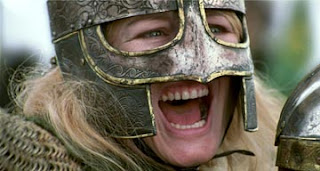
Eowyn, an outlier in the LoTR 'verse

This was certainly true in classics such as Tolkien's The Lord of the Rings, where Eowyn is very much the exception that proves the rule, as exemplified by both Arwen and Rosie Cotton's part in the story. Similarly, in A Wizard of Earthsea, the reader learns early on that "weak as women's magic" has a companion saying, "wicked as women's magic." Unsurprisingly, women do not play a large part in the subsequent story.
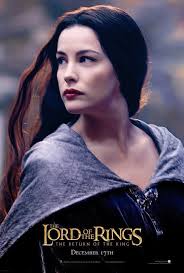
Arwen - a far more traditional heroine
So although I encountered many fine examples of the "band of brothers", any sisters at all, let alone bands of 'em, were in short supply.


Then, to my considerable delight, I encountered Patricia McKillip's Heir of Sea and Fire (1977), where a "band of sisters" comprising Raederle of An (the titular Heir), Tristan of Hed, and the ruler of Herun's heir and personal guard (all women) embark on a journey to locate Tristan's missing brother, who is also Raederle's love interest. They are very much a "band of sisters" and the friendship between them is the heart of the book. It's a tale I loved on first reading, which has since become an "old book friend."


The 1980s was distinguished by many fine books in which women writers and characters began carving a place in speculative storytelling. Bands-of-sisters remained relatively rare, but Barbara Hambly's The Ladies of Mandrigyn is an outstanding example. Their city has been captured by an evil and extremely powerful wizard, and all the able-bodied men enslaved in the nearby mines. Failing in their attempt to hire a mercenary army, the ladies resolve to rescue the men and free the city themselves -- and start by kidnapping a mercenary captain to train them for the task.
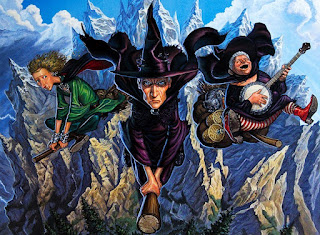
Granny Weatherwax & Co...
I believe The Ladies of Mandrigyn remains one of the finest examples of women's friendships and bands-of-sisters in the genre, but it's not entirely alone among 1980s fiction. In 1987, Terry Pratchett, published Equal Rites, which introduced Granny Weatherwax and paved the way for the sisterhood-of-Grannys, who remained Discworld's preeminent band-of-sisters until 2003, when they were joined by the Monstrous Regiment -- of women, of course!


My other, favourite band-of-sisters from that era are found in CJ Cherryh's Chanur novels (science fiction), which span the decade from 1983-1993. As a reviewer (correctly, imho) said, "...These swaggering, vain, tough-talking Hani heroines make Chewbacca look like a pussycat."


Unquestionably, Pyanfar Chanur and her Hani crew are tough in action as well as tough talking. :-)

Although fantasy and science fiction now offer an array of female heroes, and a degree of women's friendships, as well as bands of diverse buddies, the band-of-sisters is still not common. 
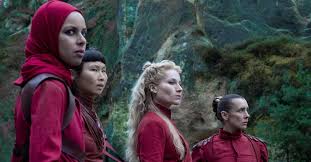
Aes Sedai: Red Ajah
First published in 1990, Robert Jordan's The Eye of the World (Wheel of Time #1) introduced readers to the Aes Sedai mages and the Aiel's warrior sisterhood, the Maidens of the Spear. Relations among the Aes Sedai are both fractured and fractious (although that is arguably true of birth siblings, including sisters), but both sisterhoods remain core to the fourteen-book series.


More recently, Tamsyn Muir's Locked Tomb series has something of a "band-of-sisters" vibe, especially in the latest book, Nona the Ninth, in which the majority of the main characters are female. There's also the core band of Nona, Camilla, and Pyrrha, to aid my case. :-)


In my The Wall of Night series, female characters are always central to the story, and in The Gathering of the Lost (Book #2) a band of young women must set aside their differences and work and fight together to survive.


I'd love to know if you have  a favorite band-of-sisters, especially in more recent fiction. If so, please do share in the comments! 

~*~

About the Author:

Helen Lowe is an award-winning novelist, poet, and lover of story. With four books published to date, she is currently completing the final instalment in The Wall Of Night series.

Helen posts regularly on her “…on Anything, Really” blog, monthly on the Supernatural Underground, and tweets @helenl0we.

~*~

Previous Posts:

February: Honing in on 2021—Celebrating the "Band of Brothers"
March: Celebrating the "Band of Brothers" in Fantasy #2
April: Celebrating the "Scooby Gang" #3

Saturday, April 1, 2023

The "Band of Brothers" in Fantasy #3 -- Celebrating "The Scooby Gang"
 .

Currently, I'm featuring the "band of brothers" in Fantasy fiction. Initially, I looked at its mythic and historical origins, then at at how it's evolved in the genre, particularly through formative works such as The Lord of the Rings and David Gemmell's Legend.

The Last Kingdom's shield wall.

x

I also mentioned that the band's sibling, the "Scooby gang", is equally integral to the wider Fantasy landscape -- and today I'm taking a closer look.

While there's an exception to every rule, the "band of brothers" very often begins as a group of disparate individuals and personalities, forged into a brotherhood by adverse, and extreme, circumstances.


The Scooby gang, on the other hand, usually starts off with friends or acquaintances, who gather up other like-minded buddies along the way. And while the stakes may be high, they're usually not quite as grim, dark, and "fate of worlds"-centric as for the "band" -- although as mentioned last month, that can change, as it did for Harry, Ron, and Hermione (plus sidekicks) over the course of the Harry Potter series.
.


Scooby gangs frequently star in YA fiction -- and a recent favorite is Rupa and her fellow ghoul and ghost-hunting friends in Tendai Huchu's Edinburgh Night series. A Scooby gang also features in TJ Klune's The House in The Cerulean Sea, where the group of children who are also supernatural beings are integral to the storytelling.


Tamsyn Muir's Locked Tomb series is another that contains an assorted group of (at-heart) friends cutting a rapier-wielding swathe across a universe of necromancers and undead legions. 


The series has strong elements of "caper" storytelling, too, where the band-of-(mostly)-buddies ribbing each other, but also having their pals' backs, is essential to the adventure. And of the lighter style of quest-journey, where a wisecracking band-of-buddies are often key to the storytelling.


We see both traditions in The Hobbit, where Bilbo Baggins and the dwarves are far closer to a Scooby gang than a "band of brothers." Their quest, particularly Bilbo's designated role as thief, has "caper" elements. And although the journey has scary moments, their adventures also have plenty of humor.


The four hobbits in The Lord of the Rings, who are also friends, may start in a similar way to The Hobbit, but the story quickly gets much grimmer and darker. So by the time the fellowship is formed, it's definitely in "band of brothers" territory.


In terms of other more recent works, Scott Lynch's The Lies of Locke Lamora is also a dark tale -- but the the titular Locke and his Gentlemen Bastards are a band of confidence tricksters, playing a multi-sided game of doublecross, theft, and vengeance. While the "band-of-buddies", who are also "brothers", is the heart of Maggie Stiefvater's The Raven Boys.


Speaking of ravens, not all Scooby gangs are human -- as demonstrated by Cinrak the Dapper and her swashbuckling rodent shipmates, who (aided and abetted by shorebound pals) sail the high seas in AJ Fitzwater's charming piratical adventure. 


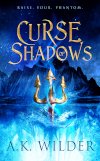
Not that Scooby gangs and bands-of -brothers are an either-or option, when all's said and done. They exist on the same spectrum, so it's not unusual to get a group of characters that blend the two. Ash and her friends, in AK Wilder's Amassia series, are a great example of this. They've grown up together, studying and training, and that camaraderie and banter infuse their relationships. 


Their quest journey, though, quickly becomes one of alarms and high adventure, in which not only romance but dangers abound, and the fate of the world is definitely at stake. So I suspect they're well along the path to becoming a fully fledged band-of-brothers, as well as buddies!

~*~

About the Author:

Helen Lowe is an award-winning novelist, poet, and lover of story. With four books published to date, she is currently completing the final instalment in The Wall Of Night series.

Helen posts regularly on her “…on Anything, Really” blog, monthly on the Supernatural Underground, and tweets @helenl0we.

~*~

Previous Posts:

February: Honing in on 2021—Celebrating the "Band of Brothers"
March: Celebrating the "Band of Brothers" in Fantasy #2

Sunday, February 5, 2023

Honing In On 2023 -- & Celebrating the "Band of Brothers" in Fantasy

.
Last year, I refeatured Having Fun with Epic Fantasy: the Band of Brothers, a post that first appeared on SF Signal. 

The play that coined the famous term

At the time, I considered it an interesting sidepost to 2022's What Makes A Hero? series, but in refeaturing it found I could not argue with the central premise that "the famous (Shakespeare: Henry V) quote, 'we band of brothers', speaks to the heart of epic fantasy."

Tom Hiddleston as Henry V
As also noted, the “band of brothers” appears throughout fairytale, folklore and myth, (examples included Robin Hood and His Merry Men, King Arthur and the knights of the Round Table, and Penthesilea and the Amazons) but also in history and in the legendary overlap between history and myth. 

LoTR's Aragorn & "not this day": note the similarity to Henry V

Arguably, King Arthur lies within that overlap, since there's reason to believe he was a real person, but almost certainly not anything like the central figure depicted in the Round Table and Holy Grail legends. 

Real historical examples include the Spartan Three Hundred (and less-mentioned allies) that died to a man at Thermopylae (480 BCE), but delayed the invading Persians long enough for the Greek states to muster and defeat the invaders by sea at Salamis, and by land at Plataea. Another, significant example is the "Sacred Band" of  Thebes, another company of three hundred comprising 150 fighting pairs who were also lovers.  

King Arthur & the Round Table: literally a 'shining company'
The King Arthur and the Round Table, the Three Hundred and Sacred Band, and the Y Goddoddin's Shining Company (celebrated by Rosemary Sutcliff in the novel of the same name) tie the "band of brothers" to epic fantasy's tradition of the quest journey and battles, usually against overwhelming odds, to save the world. 

Clearly, these traditions informs Shakespeare's famous St Crispin's Day speech on the eve of the life-and-death battle (against seemingly overwhelming odds) of Agincourt—as well as the now-classic WW2 mini series about "Easy" Company of the 101st Airborne Division. 


Yet stepping beyond epic and war, the "band of brothers" metamorphoses into the "band of buddies", aka the "Scooby gang." Aside from Scooby Doo itself, the term is closely associated with Buffy the Vampire Slayer and the close-knit friends that support Buffy and work together to overcome Sunnyvale's monsters. 

Consistent with the "band of brothers" tradition, the big-bads are frequently bigger and badder than Buffy, so the odds frequently feel overwhelming. At some point in the series, the argument is made that the whole reason Buffy survives longer than your average Slayer is because she has a "Scooby gang" rather than being the traditional "lone wolf." While at the last she literally has a band of Slayer sisters.J


Buffy & the original Scooby Gang

If epic fantasy's "bands of brothers" tie primarily to world-altering quests and battles, the Buffy-style  Scooby gang is far more closely related to fairytale and folklore's band of faithful friends and lovable (often animal or magical) companions met in pursuit of smaller-scale adventures. Puss in Boots is one classic example, Prince Ivan and the Wolf another. 


Yet whatever their origin or the style of tale in which they appear, Fantasy would not be the same without its "bands of brothers" and "Scooby gangs." So I'll be starting this year by focusing on some of my favourite examples from fantasy literature, as well as referencing examples from my own writing.

See you here again on March for more "band of brothers" and "scooby gang" fun. J

~*~


About The Author:

Helen Lowe is an award-winning novelist, poet, and lover of story. With four books published to date, she is currently completing the final instalment in The Wall Of Night series.

Helen posts regularly on her “…on Anything, Really” blog, monthly on the Supernatural Underground, and tweets @helenl0we.