Showing posts with label fantasy fiction. Show all posts

Sunday, June 21, 2026

From the Backlist: NICE GUYS versus BAD BOYS


Heo Nam-jun and Lim Ji-yeon in My Royal Nemesis on Netflix

Welcome to another post in the Supernatural Underground Backlist Series. Today's feature is from June 2010 by the wonderful author Kimberly Derting. Here she talks about the essentials of nice guys and bad boys in our fiction, and real life!

Which do you prefer? 


***
 

NICE GUYS versus BAD BOYS


... Today I’m talking about the Nice Guys vs. the Bad Boys (you know what I’m talkin’ about, ladies)!

In my YA novel, THE BODY FINDER, my main character Violet is in love with her best friend Jay…a very Nice Guy. But is he too nice? Of course not (says the author!), but I do see of a lot of debate over the Bad Boy vs. Nice Guy topic, especially in reviews. With Bad Boys, the concern is that we’re teaching girls that it’s okay to let someone treat them badly, to walk all over them. With Nice Guys, the problem is they don’t always make our hearts race or our pulse pound.


So which is better, the Bad Boy with his tough guy charm and bad-ass attitude? Or the Nice Guy who opens doors and brings his girl flowers?

As a writer, I have an opinion, a fairly strong one. We need them both. At least on paper. Because here’s the deal: how boring would it be if all the guys we read about were cut from the same cloth? How predictable would books be if all the men were just a cookie cutter mold of the last? Blech!

(Really, do they come any nicer than Lloyd Dobler in Say Anything?)


And let me just clarify, in real life I love my nice guy husband who carries in my groceries and makes sure my car has gas before I leave. I also like that he doesn’t let me walk all over him. Because, let's face it, there’s a HUGE difference between the Nice Guy and the Simpering Wimp.

But when I’m reading, I want to be surprised; I want the Bad Boys gone good, the Nice Guys turned bad, and everything in between. I don’t always want to know which is which... read the entire post HERE
 
***
 
Find out more about Kimberly Derting and her award-winning young adult novels including The Body Finder Series. 
 
Happy reading, and be sure to let us know your preference - Nice Guy or Bad Boy - in the comments.


Monday, November 10, 2025

From The Backlist: Eat, Drink, Magic!

 .
We're definitely into the season now where food is a large part of the festive magic — so we just had to refeature Helen Lowe's Eat, Pray, Magic for our backlist post. 

In it, Helen shares and celebrates the importance of food & foodie celebration to the genre. We think it's a humdinger, so read and enjoy!

Eat, Drink, Magic -- Fun With Food in Fantasy Fiction

by Helen Lowe

From Persephone's consumption the fatal pomegranate, which meant she had to spend six months of every year in the Underworld, to Snow White and the poisoned apple, or Hansel and Gretel and the Gingerbread House, food plays a vital part in myth, folklore, and fairytales – just as it does in real life.


Unsurprisingly, therefore, food also has its part of play in the Fantasy novel, covering the whole gamut from temptation, celebration, and simple sustenance.

The White Witch tempts Edmund with Turkish Delight in The Lion, The Witch, and the Wardrobe. And the Elvish waybread (lembas) in The Lord of the Rings is essential for sustenance on the great quest-journey to destroy the ring. The return of students to Hogwarts in Harry Potter is always marked by a feast, while the Honeydukes sweet shop in Hogsmeade is an essential destination for the aspiring students of wizardry...


Food can also play an important part in Fantasy worldbuilding. For example, the unwholesomeness of the Turkish Delight, which makes Edmund feel sick even as he longs for more, is contrasted with the hearty fare of the beavers' house – fresh-caught trout with potatoes and butter, followed by a "great and gloriously sticky marmalade roll." Hungry yet?


In my own The Gathering of The Lost (The Wall of Night #2), seasonality is an important part of the worldbuilding and food one of the contributing elements, from the "spice bread and sweet pastries" made for Summer's Eve, through to the fresh cherries associated with the Midsummer Festival.

Food can ground the action, too, like the pie a ravenous character (Carick) eats after having been on the run for days on end:

"The pastry was stale, but he devoured it in ravenous mouthfuls and wondered if he would ever again, in the life that had been returned to him, eat anything that tasted even half as good."


Sometimes, though, food is not just a supporting element for worldbuilding or to ground the story: sometimes it takes center stage, as in Robin McKinley's Sunshine.

The main character, Rae (aka Sunshine), is a baker and her baker's routine, including the early hours, and the food she cooks are essential to the story. Muffins definitely star! Similarly, in Joanne Harris's magic-realism novel, Chocolat, the chocolate and its magic are the heart of the tale.


And everyone who deals with the fairies and the fay knows one must not eat or drink anything offered in a fairy hill, lest one suffers the fate of Persephone or Tam Lin.

his prohibition comes up in Patricia Briggs' Mercy Thompson novels when Mercy is required to enter Fairyland; similarly in Gillian Bradshaw's Hawk of May when Gwalchmai (Gawain) enters the realm of the Fey.  And it's definitely a theme of Raymond E Feist's classic Faerie Tale.

These are just a few examples that spring to my mind – but how about you? Got any favorite foodie reads in your Fantasy lineup?


If you do have a favorite, let us know in the comments!

To check in on Helen and more on what she's up to, outside of her regular monthly post here, visit her ...on Anything, Really. J

Wednesday, July 2, 2025

Great Leaders in Speculative Fiction #6: Ulric & "Legend" by David Gemmell

 .
So far in this series, which focuses on leadership across the full gamut of speculative fiction novels, the featured leaders have all been from Team "the good guys", if not outright heroes. (If you want to check them out, there's a list at the end. :-) )

Today, though, I'm looking at Ulric, the chief "bad guy" from David Gemmell's Legend (Drenai #1.) Ulric is not a "monolithic evil" villain like Sauron in The Lord of the Rings (discussed here), but he is Legend's  primary antagonist and prepared to use black magic to achieve his ends. He's also a great leader.

I'll get to why in a moment, but the basic premise of Legend is that Ulric has achieved what's never been done before, and unified the warlike Nadir tribes. Now, he wants to conquer the world -- but the Drenai fortress of Dros Delnoch, which holds the Delnoch Pass, stands in his way. 

Ulric, unsurprisingly, intends taking it by any means necessary. Rek, the Earl of Bronze, and a patchwork army of defenders (including Druss, the legendary axeman), aim to prevent him. And the rest, as they say, is history -- or at least, the rest of the Legend story. :D

The original cover

So what makes Ulric, the Legend-ary antagonist, so great a leader? First and foremost, he has unified the Nadir, which as mentioned above, has never been done before. He's also charismatic and a military genius, which is part of what convinces so many Nadir to follow him. They're a warlike society and bask, so to speak, in the reflected glory of his successes.

As a leader, Ulric models outstanding performance, inspiring others to emulate him, but he also demands it of his followers. The same with loyalty -- but he doesn't just demand. He rewards both performance and loyalty generously, a leadership practice that revolutionizes the Nadir way. Conversely, failure and disloyalty are brutally punished, consistent with Nadir tradition.

So as a leader, Ulric not only offers both carrot and stick, but simultaneously revolutionizes and maintains the Nadir norms -- in a way that cements his followers' loyalty and serves his imperial ambitions. In order to create an empire, though, Ulric understands (yep, he's a very smart guy) that he must not only conquer, but rule. And that successful rulership and enduring empires both require stability.

Consequently, what was begun with the Nadir, Ulric extends to those he seeks to conquer. Surrender, and your lives, homes, and livelihoods will all be spared; fight, and your society will be exterminated and/or enslaved. Here's the important thing, though: either way, Ulric is scrupulous in keeping his word -- which is another reason he's a great leader. He understands that continued success, and a stable empire, depend on his followers and subjects being able to rely on his promises, while enemies really believe his threats. 

Echoes of Mongol warriors, as seen in "Marco Polo"

(By the way, if you're thinking all of this sounds a lot like Genghis Khan, I am "pretty sure" he was the inspiration for Ulric.) 

Or put another way, Ulric has internalized the observation of Joseph Stiglitz, the Nobel-prize winning economist, that, “It’s trust...that makes the world go around.” And no, Stiglitz and his quote aren't mentioned in the book (grins :D) but understanding, and manifestation, of the observation is implicit to Ulric's leadership.

Charismatic; military genius; smart; generous; both demands and rewards performance and loyalty, while brutally punishing their opposite; a man of his word, whether promise or threat; ambitious and and clearly ruthless -- all these qualities contribute to why Ulric, although the "bad guy" in Legend, is one of genre fiction's great leaders.

Charismatic leadership

He does have one other, notable quality, though.  In the midst of a bloody and bitter conflict, Ulric is prepared to honor greatness, even in his enemies. So when one of the great heroes of the Dros Delnoch defense dies, Ulric allows a funeral truce and pays respect to his fallen enemy. Doing so is a considerable risk, but honoring and respecting the hero's greatness cements his own -- and elevates, rather than diminishes, his leadership.

So, the "bad guy" notwithstanding, when it comes to leadership in genre fiction, I tip my hat to Ulric of the Nadir.

~*~

About Helen Lowe

Helen Lowe is an award-winning novelist, poet, and lover of story. With four books published to date, she is currently completing the final instalment in The Wall Of Night series.
.
Helen posts regularly on her 
“…on Anything, Really” blog, monthly on the Supernatural Underground, and tweets @helenl0we.


......................................~*~

Monday, June 2, 2025

Great Leaders in Speculative Fiction #5: Katniss Everdeen & "The Hunger Games"

 .
Can you believe it's June already? Time swoopin' by, as it does! Howeverz, it does mean we're at #5 in the "Great Leaders In Speculative Fiction" series -- *and* the spotlight is on the inimitable Katniss Everdeen from Suzanne Collins' "The Hunger Games" trilogy.

Katniss Everdeen

Up until now, the leaders featured in this series have all come from a leadership background in their society -- yes, even Kaladin in Stormlight Archive, although his background is by no means as elevated as that of Dalinar Kholin.

Katniss, though, truly is a commoner, and poor with it. Not only that, she's a poor commoner from one of her society's poorest Districts (think state, province, shire.) Although close to her mother and sister, she's also a loner except for her hunting buddy, Dale, who is also a friend. 

The most interesting aspect of Katniss as a leader, not just a hero and champion (although she's very clearly that, too) is that she remains a loner throughout. From the moment she volunteers to take her sister's place in the Hunger Games lottery, Katniss's leadership is moral, rather than the more usual paths of governance or military prominence. 

In her person, and by her deeds, she exemplifies a riposte, and an alternative, to the cruelty and repression of the Capitol, which masterminds the Hunger Games.

I feel very sure everyone reading this knows the Hunger Games premise, but 'just in case', every District must supply two of their children, one girl, one boy, to the Capitol every year, to compete in an arena where all tributes must kill or be killed. Only the last tribute standing survives the arena.

And no one volunteers -- except for Katniss. The second book is titled Catching Fire and Katniss burns very brightly throughout, but it is a flame of moral integrity as well as physical and mental courage. The combination of the two make her an inspirational leader as well. Seeing and hearing her, people's spirits catch alight. They want to follow her example and do as she does.

Yet Katniss always stands alone. In part, because she sees the realities and uncomfortable truths that most people prefer to avoid. The trilogy ends, as it begins, with Katniss taking a moral stand -- but this time, it's not one that all, if any, among those who follow her, readily understand. 

Katniss has been pushed to a brink. The fact she survives it illustrates the degree to which she has become more symbol than person. The symbol cannot be allowed to fail, or fall, which is also why her final deed carries so much weight and does bring a lasting end to the Hunger Games.

Yet for all the fires Katniss has lit, she is more alone at the end than at the outset. And however bright her personal flame, the path from the Games, through revolution, to reach that end was always a precipice, with death on one side and failure of integrity on the other. 

Unquestionably, though, the fire Katniss Everdeen lit was a conflagration, both in the trilogy's world of Panem, and in readers' enthusiasm for her story. 

~*~

About Helen Lowe

Helen Lowe is an award-winning novelist, poet, and lover of story. With four books published to date, she is currently completing the final instalment in The Wall Of Night series.
.
Helen posts regularly on her 
“…on Anything, Really” blog, monthly on the Supernatural Underground, and tweets @helenl0we.


......................................~*~

Friday, May 2, 2025

Great Leaders in Speculative Fiction #4 -- John Aversin & "Dragonsbane"

 .
Just squeaking in under the wire here, but made it for May 2 -- phew! And am stoked to be featuring post #4 in the Great Leaders of Speculative Fiction series.

This month we're back to Fantasy with the legendary John Aversin, from Barbara Hambly's Dragonsbane.  

I always think of John Aversin as a fairly ordinary kind of guy, at face value. He is the local, and only, ruler left in what was once the northernmost province of an empire. The Winterlands province has been abandoned and the inhabitants left to fend for themselves for over a century. No light matter, when the fending off involves regular raiding by barbarian tribes, the return of demons and monsters as the population dwindles, and the brutalization of that human population as dangers, poverty, and deprivation deepen.

As the local lord, it falls to John Aversin to organise, equip, and lead the local militia against these threats and maintain the rule of law, thereby supporting the local community and sustaining civilization. All of which he does, from a commitment to the aforementioned civilization and the rule of law, and because if he didn't, all those seeking to maintain those values in the Winterlands would perish. 

So-o, just another smalltime, local lord, abandoned by the world's great powers and fighting a losing battle, so doomed to be forgotten by history. That's one way the story could go. Except that John Aversin has a claim to fame that has spread beyond the Winterlands -- because he has slain a dragon, something that is notoriously difficult to do. And completely impossible, as Jenny Waynest, the local witch, puts it, if the knight tries to take: 

"...a three-foot steel blade against twenty-five feet of (airborne) spiked and flaming death."

Needless to say, John hasn't done anything nearly that stupid. Consequently, he is the only living Dragonsbane, aka successful dragonkiller. So when a dragon (Morkeleb the Black) infests the capital city of the Kingdom of Belmarie, the crown prince (Gareth) seeks out John Aversin, to ride to the south and slay it. Initially, John has no intention of going, since as he points out to Gareth, he is the Winterlands' only knight and military leader, whereas the king has hundreds at his command. 

Although my summary is just the beginning of the story, I hope it's already clear why I consider John Aversin one of the great leaders of speculative fiction. First and foremost, he lives his commitment to his people, the values of civilization, and the rule of law, and puts himself at continual hazard to uphold those values. It is, in fact, the only reason he fought the dragon.

It's also the reason he does eventually go south to take on Morkeleb the Black -- because Gareth promises him, in the king's name, that if he does, then Belmarie will re-establish civil government in the Winterlands, and send the soldiers necessary to defend them. So once again, John will hazard himself to secure a future for his people.

When he (and Jenny) reach the capital, however, they find a court far from universally supportive of Gareth's mission. Worse, some factions are prepared to tolerate the dragon's depredations (devouring, destroying, and burning) in order to further their acquisition of wealth and power. John, therefore, rather than being welcomed and helped, finds his reputation disputed and his appearance and speech mocked. He is also hindered at every turn.

What makes John a great leader is that despite the baiting, verbal abuse, and obstacles put in his way, he continues to place the larger mission and the Winterlands' wellbeing ahead of personal affront. He also, despite his rough northern speech and patched armor, exemplifies the behavior of a true knight and person of honor, by defending the refugees that the dragon has forced into the city, including those of nonhuman species, who are being falsely accused of summoning the dragon and persecuted accordingly.  

Defending the weak and persecuted might just make John Aversin a hero. The reason I believe it also makes him a great leader, is because he is capable of convincing others to emulate the behavior he models. And because in doing so, he is motivated by the same values and vision that led him to slay the first dragon and be prepared to fight the second -- the commitment to civilized behaviour, the rule of law, and the wellbeing, primarily of the Winterlands community (his people), but also of all people.

So yes, when it comes to great leaders of speculative fiction, John Aversin is not only right up there. He rocks. 

~*~

About Helen Lowe

Helen Lowe is an award-winning novelist, poet, and lover of story. With four books published to date, she is currently completing the final instalment in The Wall Of Night series.
.
Helen posts regularly on her 
“…on Anything, Really” blog, monthly on the Supernatural Underground, and tweets @helenl0we.


......................................~*~

Monday, December 16, 2024

Choose Your Weapon -- Espionage


Arcane, set in the League of Legends universe, Ekko is on a spy mission of deadly concern. 

Happy Holidays, everyone!

For the final post in the Choose Your Weapon series, I want to explore one of the most complex, and possibly most intriguing weapons at an author's disposal- Espionage.

espionage

/ˈɛspɪənɑː(d)ʒ/

noun

noun: espionage

The practice of spying or of using spies, typically by governments to obtain political and military information.

By this definition, the usual arsenal of the spy ranges between futuristic weapons al la Bond, stealth vehicles and the key to it all, information.

Yes, information becomes the weapon. If you aren't convinced, consult Sun Tzu.


The Art of War

The Art of War, by Sun Tzu (circa mid-5th Century), is the oldest known military treatise and a classic study of rivalry and competition. It has 13 chapters, each devoted to a different set of warfare-related skills. For today, it's the 13th chapter that interests me the most - The Use of Spies.

Sun Tzu said: Raising a host of a hundred thousand men and marching them great distances entails heavy loss on the people and a drain on the resources of the State... Hence the use of spies... This is called "divine manipulation of the threads." It is the sovereign's most precious faculty. 

The First Spy-Fi Novel

Even though Sun Tzu wasn't writing fiction, there are subgenres devoted to this style of storytelling. For example, The Spy by James Fenimore Cooper, published in 1821, is considered the first spy novel. It's set during the American Revolution and based on the exploits of Harvey Birch, an American secret agent. 

But the first Fantasy spy novel is considered to be "The Princess and the Goblin'', published in 1872. Complete with intrigue, camouflage, trickery and twists, Spy-fi is defined as media that centers around the adventures of a protagonist working in secret to gain hidden information. Usually, these adventures involve defeating a rival superpower or singular enemy in a fantasy or futuristic world setting--outer space, undersea, alt history/time and/or Shagrala-esk locations in the world.

Contemporary Spy-Fi

Little has changed over the last two centuries of Spy Fiction, other than writing style and the increase in female, or even non-gendered main characters. The essential ingredients remain the same: a combination of Fantasy, Mysteries and Thrillers, and some form of espionage as the main weapon wielded.

Consider the titles below and thank you Silvana Reyes Lopez for your insights too!


Incendiary

Set in a world inspired by the 15th-century Spanish Inquisition, Incendiary is a great example of espionage.

Renata has a magic ability that makes it easy to steal memories from people. She has lived a thousand lives. Yet, she only wants to live freely on her own.

Part of a rebel group, Renata now has to infiltrate the royal court in order to rescue the leader of her unit. But the palace harbors difficult memories for her, and the prince inside those walls is ready to have her blood. 


Judgment Night by C. L. Moore 

Moore’s novella begins with an ironic meet-cute.

Juille, the princess of a galactic empire, is incognito on a pleasure planet, where she meets Egide, the similarly incognito leader of the space barbarians (yes, space barbarians) at her father’s proverbial gates. Their dance of will-they-or-won’t-they-topple-each-other’s-domains twists through double crosses, divine audiences, and the use of ancient superweapons, but the book ends by asking why a galactic empire should even continue to exist.

On the way to answering that question, Moore gives us an array of “high fantasy” prose that keep us riveted in the genre. For example, the ship came to a velvety stop; the worldbuilding is neatly bound up in deep time with immense scale; and a female anti-hero who’s strong, complex, and sympathetic. She's also bad to the bone...


An Ember in the Ashes by Sabaa Tahir

Laia is a slave. Elias is a soldier. Neither is free.

Under the Martial Empire, defiance is met with death. Those who do not vow their blood and bodies to the Emperor risk the execution of their loved ones and the destruction of all they hold dear.

In this brutal world inspired by ancient Rome, Laia lives with her grandparents and older brother. The family ekes out an existence in the Empire’s impoverished backstreets. They do not challenge the Empire. They’ve seen what happens to those who rebel.

But when Laia’s brother is arrested for treason, she is forced to make a decision. In exchange for help from rebels who promise to rescue her brother, she will risk her life to spy for them from within the Empire’s greatest military academy...

Dragon by Steven Brust 

Over the years, Brust’s antihero Vlad Taltos has been involved in a lot of espionage and trickery, but in the eighth book we get that epic fantasy classic: a war

The beauty of Dragon is how petty, small, muddy, and unimportant that war is. Vlad, the supremely competent assassin and sometimes mafia boss, has to pretend to be a normal foot soldier in order to get close to an enemy. He’s utterly out of his element: uncomfortable, bored, and terrified. As the story wraps up, it expertly combines the satisfaction of a plot well-executed with dark satire and just a touch of sadness at such a useless loss of life.

All this is told in Brust’s spare and almost Hammett-like first-person prose, which describes epic fantasy figures and eldritch magic weapons as though they’re everyday nuisances...


Warcross by Marie Lu

Emika Chen is desperate for some quick cash to pay her rent, so she decides to hack herself into the global sensation Warcross, a video game that took the world by storm. She soon realizes she just hacked herself into the opening game of the international Warcross championship, making her an overnight sensation.

Convinced she’s going to get arrested, she’s surprised when she gets a call from the game’s creator, the young billionaire Hideo Tanaka, offering a deal she cannot refuse. 

***

Care to share your favorite Spy-Fi book or film? We'd all love to hear about it.

xxKim :)

***

The Complete Choose Your Weapon Series 2024

Poison

The Perfect Storm

The Sword

Firearms

Ranged

Spells

Unarmed

Curses

Time Travel

Invisibility

Espionage

***

About Kim Falconer

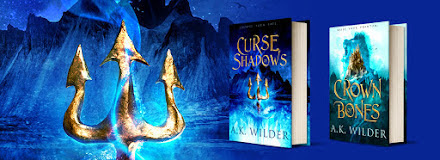
Kim Falconer, also writing as AK Wilder, has released Crown of Bones, a YA Epic Fantasy with Curse of Shadows as book 2 in the series. Currently, she is working on the third book, out in 2025.


Kim can be found on AKWilder Twitter, Facebook, Instagram and KimFalconer.com. 

Throw the bones, read your horoscopes or Raise Your Phantom on the AKWilder.com site See you there!

Monday, September 16, 2024

Choose Your weapon - Curses


(Sofia Boutella) awakens in “The Mummy.” (Universal Pictures)

What do Egyptian Mummies, Red Riding Hood, Rapunzel and Snow White have in common? 

That's right. The curse!

Today we are talking about curses, the words intended to "inflict harm'. They can be a more dangerous weapon than you might imagine, specifically because they are so darn hard to undo.

Curse

noun

1.

a solemn utterance intended to invoke a supernatural power to inflict harm or punishment on someone or something.

"she'd put a curse on him"

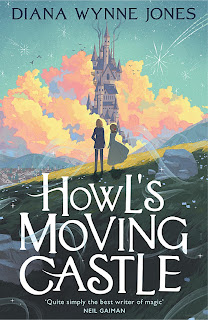
Ramped throughout history, across all cultures and all times, the curse has packed a potent punch. In Fantasy fiction, it has an even more powerful presence. From Heart's Blood by Juliet Mariellier to The Girl Who Fell Beneath the Sea by Axie Oh, and Howl's Moving Castle by Diana Wynne Jones to Anna Dressed in Blood by Kendare Blake and Blood Like Magic by Liselle Sambury, let's look at some of the most complex and deadly curses ever uttered.

Just remember that curses can be used as protection (against tomb robbers and thieves, for example) and often they have a personal note that runs deep, possibly even generational. What launches the curse in the first place isn't always filled with evil intent...


Heart's Blood by Juliet Mariellier is a stand-alone historical fantasy for adult readers. Within the pages, you will no doubt recognize elements of the fairy tale Beauty and the Beast, but there is an interesting twist. 

What is this curse that plagues Anluan, or is it the entire surroundings that are touched? Is it the young scribe Caitrin herself whose life has been changed forever?

When you discover the why of this curse, all will fall into place, unless you've run out of time...


The Girl Who Fell Beneath the Sea by Axie Oh is a retelling of the Korean story of Shim Cheong. Here we have some similarities to the ancient Greek tale of Psyche and Eros only this curse is much deeper than first assumed. While deadly storms, war and misguided sacrifices drive the plot, a deeper sense of love, family, community and soul grows.

Like Psyche, Mina has a choice to make, though that's where they part ways. Mina is no damsel in distress but a force of nature not afraid to pave her own way. 

Higher powers may have forged this curse, but that won't stop a young girl from trying to break it in two!


Howl's Moving Castle by Diana Wynne Jones is a YA book made even more popular by the 2004 Japanese animated fantasy film by the same name, written and directed by Hayao Miyazaki. 

Within the pages, and the movie version, lies a string of curses around which the plot twists. What moves the story along so well is not only the curse itself but the goal of breaking it... or 'them' as we find more than one MC is labouring under these deadly weapons.

Let it be known that there is far more to Howl and the elderly Sohpie than first meets the eye! 


Anna Dressed in Blood by Kendare Blake is a straight-up YA horror not to be read alone in the dead of night. The main characters are twisted, revengeful and angry, perfect for each other, or so it seems. 

The curse in this book comes alive as it is discovered, making for an edge-of-your-seat experience you won't ever forget. Cas may be bent on breaking the curse, but when he finds out why it was cast in the first place, the whole plot turns on its head.

The question is, where will you be standing when it does?


Blood Like Magic by Liselle Sambury starts out intimate and personal, full of black girl witch magic, hope and promise. But that all goes down the drain when a terrible choice appears. Voya must choose correctly, or her family line will lose their power, forever. 

Unfortunately, making strong choices is not Voya's forte, and in this case, right or wrong will lead to innocent deaths.

An urban fantasy not to miss; a curse to avoid at all costs.


* * * 

Do you have a favourite fantasy fiction curse?  I'd love to hear about it in the comments. 


Choose Your Weapon Series 2024

Poison

The Perfect Storm

The Sword

Firearms

Ranged

Spells

Unarmed

Curses

Time Travel

Invisibility

* * *


About Kim Falconer

Kim Falconer, currently writing as AK Wilder, has released Crown of Bones, a YA Epic Fantasy with Curse of Shadows as book 2 in the series. Currently, she is working on the third book, out in 2024.

Kim can be found on  AKWilder Twitter, Facebook and Instagram. 

Throw the bones, read your horoscopes or Raise Your Phantom on the AKWilder.com site


Tuesday, June 25, 2024

From the Backlist - Feathers, Fur, Fangs, and Snakes

Shapeshifter fro, Diablo 4 Icy Veins Build
 Hello Sup Readers and Writers!

It's time again to explore our awesome Backlist!

Today we are sharing a post by the author of the bestselling Mortal Path series, Dakota Banks. Her thoughts on shape-shifting from June 28, 2010 are just as relevant in 2024. 

Read along to discover how, and why, this magic works so well!

* * *

Huge Jackman is Wolverine


Hi, I'm Dakota Banks. If I were to die and come back as something, it would be as a Dove extra dark chocolate bar in the hands of the man to the left...

... Now that you've learned everything there is to know about my personality... eyes over here, please...

... Werewolves also have a long history of stories behind them. Ancient Greek gods turned a king with an appetite for human flesh into a werewolf. There is a famous story from the 1600s involving a she-wolf. A French king saw a hunter in his woods and asked him to report on the success of the hunt. The hunter encountered a vicious wolf who was too strong for him to kill, but he managed to cut off the wolf's forepaw. He wrapped it up and took it to the king. When the king heard the story, he unwrapped the bundle and found a woman's hand with a gold ring on her finger. Horrified, he recognized the ring as belonging to his wife. Searching her out, he found her injured, with her hand missing. She admitted being the she-wolf and was burned to death...

... People tend to develop their myths and folklore using animals that are local to where they live. That gives us werehorses from Europe, weredolphins from Brazil's Amazon River basin, wereseals from island communities, werehyenas from Africa, and weremers (okay, mermaids) from countries that sailed the oceans...

... For my writing, I wanted to see what I could do outside the vamp and werewolf norm. I found the myths of ancient Sumeria fascinating, so I built a story around the idea that some of their gods, goddesses, and demons are still around today. Only a few humans know about them, and are aligned for or against. I was lured in by shapeshifting, though, so there are demons who transform into various horrid forms. I have a lot of fun writing the Mortal Path series! The second book is Sacrifice - READ THE WHOLE POST HERE.


Thanks for joining us in exploring the backlist!

See you next time! 

The Sup