Showing posts with label Terry Pratchett. Show all posts

Saturday, November 16, 2024

Choose Your Weapon - Invisibility


"Timely, relevant, and genuinely terrifying, Leigh Whannell’s The Invisible Man recontextualizes a classic Universal monster into a modern examination of abuse, toxicity, and gaslighting." - Jeffrey Zhang

What is Invisibility?

Today we are looking at another weapon used in the Fantasy genre: invisibility. Simply stated, it is the state in which you are not seen.

Types of Invisibility

There are myriad ways of being invisible in Speculative Fiction.

Consider Magical rings, cloaks, potions and spells. Or magic conferred by a mythical creature, sorcerer, witch, or perhaps an ancient curse. 

And then there is Psychological, as in mind control, glamours ... your basic smoke and mirrors.

Also, we think of technology, which is seen mostly in SF via things like stealth tech, futuristic camouflage, DNA manipulation and advanced refraction of light.

Now, let's look at how these types of invisibility play out in our history of storytelling.

Early Fiction

Invisibility as a Weapon appears in very early fiction. Think of Hades (the god, not the destination) and his magic-imbibed helm of invisibility. Homer (circa late 8th or early 7th century BC) tells us he wore it when emerging from the underworld. In the light of day, Hades sees us but we don't see him.

Things are complicated with this helm when Perseus borrows it from Athena and uses it to assassinate the sleeping Medusa...


Later, in 1897, HG Wells gave us The Invisible Man, a SF novella about a scientist who turns himself invisible through technology. He uses his chemical inventions to lower the refractive index of a substance to that of air. This makes the substances, ie. his body, invisible to light. Although he intends to use his invention for self-indulgence, he ends up overwhelmed by isolation and falls into a mental spiral of madness and terror.

More Recent Fiction

Along the lines of The Invisible Man, Translucent, an original character from the Amazon series The Boys (not known in the comics series but replacing the alien Jack From Jupiter). Translucent can become invisible and repel bullets with his carbon metamaterial skin. It's pure technology, not magic. Like many, he is known to misuse his superpowers on unsuspecting innocents. He also gets depressed.

Forget-me-nots

Some writers give characters the ability to become so obscure they are forgotten or never noticed. Terry


Pratchett does this in Discworld, a comedic fantasy book where Granny Weatherwax and Tiffany Aching remain visible, but are extremely difficult to notice. The Grey Men in Robert Jordan's Wheel of Time have this skill as well.

This technique appears in the Arcane Ascension, a series by Andrew Rowe. We also see magical objects with similar abilities.   

Oh, and for a more contemporary/mystery/thriller/fantasy, The Sudden Appearance of Hope by Claire North is riveting: "... the tale of a girl no one remembers, yet her story will stay with you forever."

Magical Items

Night Angel by Brent Weeks has a character who is given a magic device that makes him the perfect assassin. Is it a call back to JRR Tolkien's LOTR? Of course, I must mention this cursed/magic ring forged in the Cracks of Doom.

The Crimson Shadow trilogy by RA Salvatore is also an example. Here, the MC has a cloak that grants him invisibility, but when he uses it, it leaves behind a crimson shadow burnt into the ground.

Deals with Devils

In David Eddings' Elenium series, two of the knights, Tynian and Ulath, make a deal with the Troll Gods whereby they can exist in the smallest fraction of every moment, meaning no one can see or hear them yet they can perceive everyone else. The narrator acknowledges this as faulty logic, the explanation being it works because the Troll Gods are so neurologically divergent they think it will work.  So it does.

More recently penned, though set in the 1800s, we meet a young woman who makes a Faustian bargain to live forever but is cursed to be forgotten by everyone she meets. I'm talking about The Invisible Life of Addie LaRue by VE Schwab. Poor Addie can interact with others, but after a while, they forget she ever existed. The psychological repercussions are, at times, devastating. 

Mind Control

In the Books of Raksura by Martha Wells, one of the Queens has the ability to turn off people's awareness of her presence, and she becomes invisible in social and/or action sequences. Of course, we all remember this technique from Star Wars when Obi-Wan uses the Force to 'erase' himself when convenient.

Fun, Fear and Folly

The ability of invisibility can help our beloved characters get through a tough spot, but in most cases, they suffer consequences as a result. From Frodo's stolen ring to Rosette in the Quantum Enchantment series who uses a glamour to hide herself from danger, the actions come with a price. They hear something they shouldn't. They see an unforgettable horror. Or they are exposed unexpectedly, at the worst possible moment.

Invisibility is undeniably a powerful weapon, but would it be your first choice?

Let us know in the comments!

xx Kim

Choose Your Weapon Series 2024

Poison

The Perfect Storm

The Sword

Firearms

Ranged

Spells

Unarmed

Curses

Time Travel

Invisibility

***

About Kim Falconer

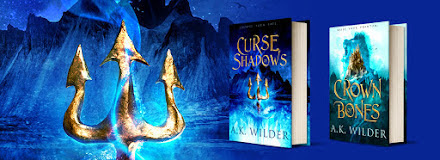
Kim Falconer, writing also as AK Wilder, has released Crown of Bones, a YA Epic Fantasy with Curse of Shadows as book 2 in the series. Currently, she is working on the third book, out in 2025.


Kim can be found on AKWilder Twitter, Facebook, Instagram and KimFalconer.com. 

Throw the bones, read your horoscopes or Raise Your Phantom on the AKWilder.com site See you there!

Thursday, June 17, 2010

Bumping Jane Austen around

Contest is over ... and the winners of an ARC of Jane and the Damned are...
Nymfaux and Anne!
Please send your snailmail address to jmullany AT comcast DOT net.

... or, how I evolved into a paranormal writer.

Actually, it was quite simple. My editor asked me to become one.

I'm Janet Mullany and far too often in my life, my words, pronounced loud, frequently, and in public, come back to haunt me. Things like Who needs paranormal elements in Regencies? There's so much more interesting stuff in the period no one writes about and it's all true.

Another example was, Of course I'll never write about a nineteen year old virgin prancing around in drawing rooms. The result of that one was The Rules of Gentility, written for the same editor, who gave me this terrific opportunity to subject Jane Austen to blood, biting, and other unwholesome activities in Jane and the Damned, which will be released in October, 2010.

I had changed my mind about paranormal/fantasy elements during the Regency when I read, and was blown away by, Naomi Novik's amazing Temeraire series (I think she may have been one of the writers who prompted my original comment). But I never thought I'd write one or incorporate Austen into a book (You'll never catch me writing an Austen knock-off--oh, shut up already).

But when I thought about it I had dabbled in fantasy when I first started writing, because it was such fun to make stuff up. It still is. And I didn't know what I was writing or going to write then, so I was trying all sorts of things, and I wrote this scene, The Companions Are Chosen for the wonderful Toasted Cheese Literary Journal in 2001. I should point out that it is meant to be a parody, which is why there's so much alliteration and Smeg has (at least) three hands, but I didn't intend the Mighty Phlegm's name to change to Dork halfway through. These things happen.

So I'd never written vampires before and I had to forget all the vamps I'd ever read about: the ones with exhtra letters in their names, the excessively bloody ones, and Terry Pratchett's funny ones that are all about the girls in underwired nighties. I had to have vamps who would fit in in Georgian England (the book is set in 1797) because I wanted them to be "out" and visible in society. I broke some of the vampire rules--the Damned can go out in daylight, for instance, although they like to stay up late partying so they don't generally get up too early. (My critique partners said they sounded like teenagers.) They are oh so sophisticated and the ton adores them and the gossip papers report on their activities. And having a vamp suck your blood--or dine on you, as they'd say--is very, very pleasurable.

So what's not to love about being a vampire? They're damned, immortal but not indestructible, in a culture that takes heaven and hell very seriously. They have too much knowledge: they've seen too much, they've seen love fade, and they've learned not to regret anything.

On the other hand, they do manage to have a very good time. And so does Jane.

How do you feel about incorporating real characters like Jane Austen into fiction? Or which about books about her characters, sequels and prequels, have you read and would recommend?

I have two ARCs of Jane and the Damned to give away today! I'll pick winners by midnight (EST) Friday and post names of the winners at the top of this post on Saturday morning.

There's also a Damned Good Contest taking place on my website and some excerpts, so please go on over and take a look.