Showing posts with label Ursula Le Guin. Show all posts

Friday, March 1, 2024

The Year of the Villain #2: Ursula Le Guin & Earthsea


 .
(Warning: this post does contain a spoiler regarding the outcome of A Wizard of Earthsea. I'll alert you again once we get there.) 

Otherwise, welcome back, gentle readers, to the Year of the Villain in our own, much loved, Fantasy fiction.

If you're a regular here, you may be thinking, "Hey, doesn't Helen always go from Tolkien to Ursula Le Guin?"

In which case, although it's by no means "a truth universally acknowledged", you wouldna be wrong either. Very often, I do follow Tolkien with Le Guin.

Here's why. Foremost, I perceive both as hugely influential on the genre, but also profoundly different in terms of how their books work. So when looking at any aspect of fantasy storytelling, such as villains, worldbuilding, or magic, their styles illuminate very different terrain. 

They're both master storytellers as well, so there's much to be learned, as well as to delight in, by shining a light on their work. 

So-o, in last month's deep dive into The Lord of the Rings I pointed to its villains being monolithic and very often remote, and their evil world-threatening, i.e. Sauron. Even secondary antagonists such as the Lord of the Nazgul and Saruman are large scale and relatively "distant", and although Gollum is small, personal, and vicious, his corruption stems from the ring, and via the ring, from Sauron.

In terms of Le Guin's Earthsea, I'm going to look at the first trilogy, which I consider the most formative, although the same principles inform all her work. The three books are A Wizard of Earthsea, The Tombs of Atuan, and The Farthest Shore.

The Nature of Earthsea Evil

In general, Earthsea's evil -- and the villains that go with it -- are not world-threatening. (Bear with me, all those who're shouting The Farthest Shore, because I'll come to that. :-) ) Evil is part of the fabric of the world, particularly its earth, as we see with the stone of the Terrenon and the tombs of Atuan, and given effect by those who choose to serve it. For example, Serret and her husband with the Terrenon stone, and the priestess Kossil, in the tombs. 

The evil may seek expansion through its servants, but in general it is confined to a geographic location, with many counterbalancing forces in the Earthsea world. These include its oceans and the wizards, or mages, who are charged with maintaining the balance of magic and powers. And because the old evils of earth rely on human servants, the servants' villainy manifests as corruption and possession, raiding and murder within a sphere of influence, rather than all-out war on the world.

Dragons are another of the forces the wizards must contend with. Although powerful magical beings they are not evil in and of themselves. Rather, very like humans, they may, individually or collectively, engage in villainous deeds such as killing, looting, and destruction. Like the evil wrought by the old powers of the earth, through their servants, the dragons' villainy is limited by their physical and magical strength, so tends to be regional.

This is the pattern of evil established through A Wizard of Earthsea and The Tombs of Atuan, in which the innate evil of stone and tombs, for example, are given shape through villains such as the Lord of the Terranon and Kossil. Alternatively, dragons like Yevaud lay waste to islands like Pendor -- not unlike the Kargish raiders that go a-viking, murdering, looting, and pillaging through Gont.

The Contest Between Hero and Villain

If Earthsea's evil, and its villains, were limited to the old powers of earth and the dragons, the only difference between its approach and that of The Lord of the Rings would be one of scale. But in A Wizard of Earthsea, Le Guin gives the contest between protagonist and antagonist a very different focus to Frodo--and Gollum's--struggle against the externalized evil of the ring.

The protagonist of all three novels is Ged. The youthful wizard of the first book is arrogant, proud, and jealous, as well as strong -- all qualities that lead him to undertake forbidden magic, unleashing a demon into the world. Consistent with the overall approach of the worldbuilding, the nameless demon's primary danger is to Ged himself, because it seeks to possess him. If successful, it will then use his strength and magical ability to do greater harm. 

[Spoiler follows -- and although, given the fame of the story, the ending is probably well known, if it's a concern, maybe skip the next paragraph or if required, stop reading altogether.) 

In order to defeat the demon, Ged must name it. After a long chase across sea and land, he finally comes face-to-face with his nemesis -- and the name they both speak in that moment is the same. The demon generated by his act of hubris is not an external force, but a manifestation of his jealousy, hatred, and pride. In the end, Ged is both the hero and the villain, with the evil that must be defeated originating within himself.

The Farthest Shore, Earthsea #3

This is the third -- and was for a long time the final -- book in the Earthsea series. In this book, the evil is world threatening, as a breach in the barrier between life and death saps knowledge and unravels magic, destroying Earthsea's balance. Yet consistent with Le Guin's overall approach, the threat arises through the hubris, folly, and self-will of a sorcerer, Cob, in seeking to avoid death, which twists the laws of nature -- rather than from a malevolent external power. 


To my mind, this exemplifies the chief difference between the villains of Tolkien and Le Guin. In one case (Tolkien), the villains largely operate as "the other", their evil an external force. In the other (Le Guin), the evil is integral to the world and the villainy arises through the weakness, ill nature, and ethical failings of human beings: forces that exist within all of us. 

I believe these represent the two main approaches to writing villains in fantasy storytelling, which is why they are my starting point for the series. In the hands of master storytellers like Tolkien and Le Guin, both approaches make for great reading, which is why I've always loved their work.

© Helen Lowe

~*~

About the Author

Helen Lowe is an award-winning novelist, poet, and lover of story. With four books published to date, she is currently completing the final installment in The Wall Of Night series.

Helen posts regularly on her “…on Anything, Really” blog, monthly on the Supernatural Underground, and tweets @helenl0we


Sunday, March 1, 2020

Year Of Worldbuilding In Fantasy #2: Spellbinding – "A Wizard of Earthsea" by Ursula Le Guin

.

#YoW Year of Worldbuilding
#WiF Worldbuilding in Fantasy


Worldbuilding lies at the heart of Fantasy fiction, which is why I've declared 2020 my Year of Worldbuilding in Fantasy and started at my personal beginning last month, with CS Lewis's The Lion, the Witch, & the Wardrobe.
.
In the introduction, I promised that through this year I would continue to focus on some (but by no means all -- the year isn't long enough for that!) of my personal favorites. I'm also hoping to shift between older and newer works and to look at more than one subgenre of fantasy  – and also style of worldbuilding.

While this remains my intention, for this second post I am going to stay with an older work, which is also an Alternate World (aka Secondary World) fantasy, because when it comes to Fantasy literature and worldbuilding I just can't go past Ursula Le Guin's Earthsea.

Firstly, because Earthsea is a fabulous world (imho!) The other, main reason is because as a young but already avid Fantasy reader, Earthsea was the second really formative work in shaping my appreciation and love of worldbuilding. I had read other works between The Lion, the Witch, & the Wardrobe and A Wizard of Earthsea, but Earthsea stood apart from the rest.

I believe this is quite a tribute to Earthsea and Le Guin, since as Narnia was the first real fantasy novel I encountered it was always likely to have a big impact. As aforesaid, I had a far greater exposure to the genre by the time I picked up A Wizard of Earthsea – but it still blew me away.

Spellbinding

Being a poet as well as a novelist, it's perhaps not surprising that A Wizard of Earthsea began casting its spell from the moment I read the poem that prefaces the (fascinating!) map and the first chapter:

Only in silence the word,
only in dark the light,
only in dying life:

bright the hawk's flight
on the empty sky.

I was going to say that the poem, haiku-like in its simplicity (although not a haiku) prefaced the opening lines – but as soon as I shaped that thought I realized that the poem itself constitutes the opening lines. It captures, and encapsulates so much of the Earthsea world, which at first glimpse appears equally small: a scattering if islands amid an immensity of ocean that like the white space of the page, stretches beyond knowledge.

Earthsea is also a world of profound juxtapositions, beginning with the small footholds of land amid the sea, but including the comparative smallness of people and their lives against the physical immensity and longevity of the world's only other sentient beings, the dragons. It's also a world in which nature has a profound influence, not just because of the dominance of sea over land, but because it lies at the heart of the magic that wizards learn and practice. And in which the most significant juxtaposition is that in learning magic, the mage comes to understand the importance of not using it lightly.

All this is pointed to, and hinted at by the poem, but perhaps its greatest significance in terms of worldbuilding lies in stamping an atmospheric impression of the world on the reader. This occurs before we come to the map, with its visual depiction of "the world", and subsequently the story. Moreover, it's almost invisible, something I imagine few dwell on in their haste to get to that story – and yet it has a resonance that is already shaping our view of the world we are about to enter.

With The Lion, the Witch, & the Wardrobe I discussed how Lewis draws us into his world gradually, matching our experiene to Lucy's as she progresses through the wardrobe and into the snowy wood. In A Wizard of Earthsea, even leaving aside the poem, we're into the world from sentence one:

"The island of Gont, a single mountain that lifts its peak a mile above the storm-wracked Northeast Sea, is a land famous for wizards."

Where the poem has conveyed the spirit of the world, this single sentence grounds the reader and the story in its physical reality of (an) island and ocean, but also makes it clear that in this world, magic is real. The next few sentences go on to give a sense of historical context and depth to those qualities, as well as "placing" the main character, Ged, within the world that has been so instantly invoked.

The first chapter layers considerably more physical and contextual depth on the opening brushstrokes that established the world of islands and ocean, wizards and magic. The reader learns something of the nature of that magic, i.e. of language and naming, innate power and taught knowledge, as well as the nature of the world: a preindustrialized village-based society in which warfare is not common, but does occur.

As with Lucy in Narnia, the main character, initially called Duny but who becomes Ged, is the reader's window into that expanding knowledge. Unlike Lucy, Ged is born into Earthsea, he doesn't cross into it from our world, which is another reason for immersing the reader in the world from the outset.

Despite the story taking place entirely within the alternate world, and learning from Sentence One, Chapter One, that wizards are part of Earthsea, I believe the worldbuilding feels less "magical" and more "real." In Narnia, we share Lucy's wonder at her transition into a new world peopled by magical beings and talking animals. Whereas in Earthsea the reader is immersed in Ged's childhood reality: from the harshness of village existence, the excitement of magic and the allure of its power to a young boy, and the terror of warrior raiding parties.

Very different worlds and approaches, but both very skilful and compelling, as well as influential examples of Fantasy worldbuilding.
.
---

Next Month: I'm still pondering the next installment, so watch this space, but at present my ponderings are honing in a more recent work – and maybe one set in this world as well.

Meanwhile, let's all be careful out there and look out for each other.

---

Helen Lowe is a teller of tales and purveyor of story, chiefly by way of novels and poetry. Her first novel, Thornspell (Knopf), was published to critical praise in 2008. The second,The Heir of Night (The Wall Of Night Series, Book One) won the Gemmell Morningstar Award 2012, and the sequel, The Gathering Of The Lost, was shortlisted for the Gemmell Legend Award in 2013. Daughter Of Blood (Book Three), was published in 2016 and Helen is currently completing the final novel in the series. She posts regularly on her “…on Anything, Really” blog, monthly on the Supernatural Underground, and is also on Twitter: @helenl0we.

Monday, March 20, 2017

Building Fantasy Worlds

Image by Surreal Artist Jacek Yerka
Hi Everyone,

I chatted with the Sup authors last week about how they created their worlds. So revealing! Here's what they had to say:

"The idea of a dark or twilit world was inspired initially by the swift nightfalls of Singapore, when I lived there as a child." Helen Lowe

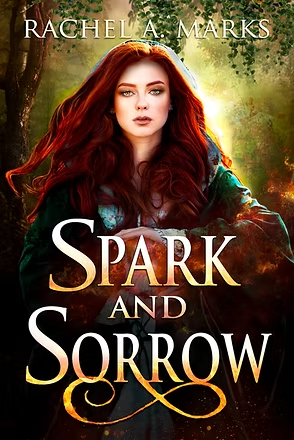
"I always try to weave as much fact into my fiction as I can ..." Rachel A. Marks

"I didn't have to build from scratch, just point out what was different about Para-Dallas." - Amanda Arista

"I like to explore how environment shapes my characters, politics, beliefs, and then I let my imagination go wild." Kim Falconer

And then, there's George R. R. Martin -  [who] "... enjoys being surprised by his own work. He thinks of himself as a “gardener”—he has a rough idea of where he’s going but improvises along the way. He sometimes fleshes out only as much of his imaginary world as he needs to make a workable setting for the story.

Tolkien was what Martin calls an “architect.” Tolkien created entire languages, mythologies, and histories for Middle-earth long before he wrote the novels set there. Martin told me that many of his fans assume that he is as meticulous a world-builder as Tolkien was.

They write to say, ‘I’m fascinated by the languages. I would like to do a study of High Valyrian'—an ancient tongue. ‘Could you send me a glossary and a dictionary and the syntax?’

I have to write back and say, ‘I’ve invented seven words of High Valyrian.''” —Laura Miller, in The New Yorker

Why is world-building so important? 

The environment our heroes and villains live in is a major character of every book. It may be silent, behinds the scenes, shaping outcomes without the reader noticing, but it must exist or there's nowhere to for the story to unfold. And it must become real.

Some authors say that readers will believe in anything as long as it’s plausible, but I think Orson Welles proved that wrong when he read The War of the Worlds, by H. G. Wells, over the radio, causing mass panic. No, Martians weren't landing.

Fantasy readers don’t expect a world to adhere to Natural Law, but they do want it to adhere to its own laws. Ursula Le Guin reinforces this saying inner coherence, not plausibility, holds the reader enthralled. 

So let's look at how some of the Sup authors build worlds, and make them plausible, to us.

The Dark Cycle Series

Rachel A. Marks - The Dark Cycle Series


"When thinking about how to begin building my story world, I always try to weave as much fact into my fiction as I can. In my mind, this creates a more vivid reality for my characters to populate. The best part of imagining Aidan's world when writing DARKNESS BRUTAL was being able to take the gritty reality of LA where I've grown up, play it up by overlaying urban legends I've been hearing since I was a kid, and then enrich the rules with supernatural mythos. And then make sure that the only one who can see this invisible world of demons, angels, and ghosts, is the main character, Aidan. So, part of the conflict the main character has in his journey is also a conflict in the world itself. 

"Seventeen-year-old Aidan can see demons, smell emotions, and feel the past in his skin, but will it be enough to save his little sister from the deal his mom made with a powerful demon all those years ago? "
The Wall of Night Series

Helen Lowe - The Wall of Night Series


"The Wall of Night world was with me for many years and the idea of a dark or twilit world was inspired initially by the swift nightfalls of Singapore, when I lived there as a child, then developed further when I spent a winter in Sweden with its "endless nights". 

The Norse myths with the "twilight of the gods" was also a considerable influence on the development of the world. As the story and the world expanded away from the Wall of Night to the Southern Realms of Haarth, influences from other landscapes played their part, from the khlongs of Bangkok influencing the River City of Ij, to the Nelson region of New Zealand shaping the physical character of the Duchy of Emer."

"The Wall of Night: fortresses of shadow and decay and an ancient war reigniting in a world where everyone could be an enemy and no-one is what they seem. Lost powers, undiscovered secrets, and a society divided by prejudice, suspicion, and fear -- and Malian, heir to the warrior House of Night and a promise that has endured down centuries: that she will not stand alone." - Good Reads: Daughter of Blood

Diaries of an Urban Panther

Amanda Arista - Urban Panther Series

"I live in Dallas and not too many books I had read captured the true urbanite quality of the city. It’s got everything that NY and Vegas with more cars and less smog. Drive 10 minutes and be in a vibrant down town or drive 30 minutes and be out in open land with cows. So I started there with my world-building, and just smoothed a layer of paranormal over the top of that. 

I was looking at the normal weird stuff and explaining it with paranormal things, like graffiti is actually protection spells and sounds in a dark alley that are actually were-creatures. I didn't have to build from scratch, just point out what was different about Para-Dallas. So my main character Violet could ease into the magical along with the reader. She still got her coffee, I still got to write about magic and things that blow up."

When Violet Jordan becomes a midnight snack for a werepanther, his infectious bite invokes the first element of her destiny to become the leader of the Dallas Wanderers. But if push comes to claws, can Violet make a fatal strike against the men threatening her new family, her new home and her first boyfriend in ages?

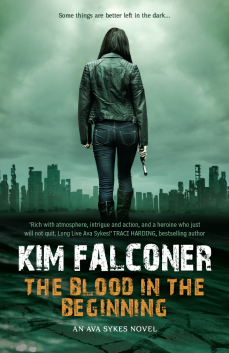
The Ava Sykes Novel Series

Kim Falconer - The Ava Sykes Novel Series

"The Aftermath. What a mess. The initial repair efforts deserved a medal. Having relief funding in the trillions helped. Who couldn’t make things as good as new, with that kind of backing? But fifteen years later and the funding isn’t so generous. It dried up completely in Anaheim, for example. There’s nothing there anymore but capped fracking wells and an abandoned amusement park. Kinda sad. I’d heard Disney Land was amazing, back in the day. Earthquakes will do that to a place, if earthquake it really was. There were all kinds of conspiracy theories, and then, there's the sea . . ."

"Undergraduate by day, bouncer by night, Ava Sykes works hard to build her life in New LA, a city experiencing the Aftermath of a seismic disaster. Her prospects improve until she stumbles upon an evil no sane person would want to confront. Suddenly, her life, her city and everyone she cares about is in danger. Pushed to the edge, Ava taps a power she never knew she had . . . and uses it."

What are some of your favorite worlds in books, or films? Feel free to share them in the comments.
xxKim

Kim Falconer's latest release is out now - The Blood in the Beginning - and Ava Sykes Novel. Find this novel in a store near you.

You can also learn more about Kim at AvaSykes.com, the 11th House Blog, and on FaceBook and Twitter.  Or on GoodVibeAstrology.com

She posts here at the Supernatural Underground on the 16th of every month and runs Save the Day Writer's Community on Facebook. Check out her daily Astro-LOA Flash horoscopes on Facebook.