Tuesday, December 21, 2021

A Season of Celebration—and of Storytelling

 .

by Amanda Arista, Kim Falconer, & Helen Lowe
.

Introduction

Stories that make the heart beat faster are a big part of what we’re all about, here on Supernatural Underground (SU).


And now we’re in the time of year, from Halloween, through Thanksgiving, Hanukkuh, and Christmas, to New Year, that’s all about festival and celebration—of fire and candlelight in the midst of winter’s dark in the northern hemisphere, and of bright days and midsummer stars in the south.
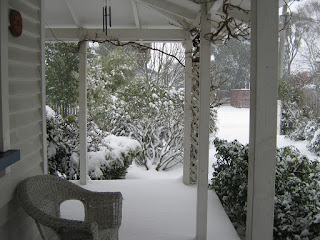
Winter...

Most of all, whether north or south, it’s the season of coming together with others and of storytelling (as well as food, fizz, and gifts!) As individuals and communities, we tell our tales of the year that’s been: of the challenges experienced and also what’s lifted us up; of those we’re missing and those we look forward to meeting again. We weave our magic of hope and commitment to each other, in order to not only keep going, but advance with renewed resolve into the year ahead.

Summer: Pohutakawa, the NZ "Christmas tree"

With the celebrations in full swing and the year’s end imminent, we were reflecting on all these elements of celebration, festival and fiction—which brought us to this post, not only to share our insights into how the elements manifest, but why we believe they matter.

~*~

Amanda Arista: The Real Magic of Santa Claus

Santa Claus is my favorite holiday story. A man so imbued with the spirit of wonder, so empowered with good will, he can visit every good child in one night to give presents, with a magic more powerful than time and space. I still enjoy watching movies like Santa Claus: The Movie (1985), The Christmas Chronicles (2018), The Santa Clause (1994), Arthur Christmas (2011) and my personal favorite as a kid that honestly probably explains a LOT about the genre that I write, The Life and Adventures of Santa Claus (1985).

What I particularly like are the origins of Santa Claus, which most of these above touch on. How did Santa become Santa? Most of them have Santa starting out as human who was given the mantle of Santa Claus and all the powers that came with it. Usually, the gift was bestowed after a resurrection moment where the man proved his dedication to the wonder of children. In one version, he fights in a supernatural war. In another, he dies on his way to deliver toys.

Now, if you read anything that I’ve written in the past ten years, you’ll know that in my book, that makes Santa a hero, and his elixir for his heroic moment was immortality, so he could give magic to all the children in the world forever.

Told you it was the best story.

The story of Santa took on a different note when I became a parent. I read all the stories to my own child, watched all the movies. Her wonder, her belief, her story-wired brain adored the tales probably as much as she liked the biproduct of them- PRESENTS!

But as a parent who knows that Santa is just that, a story, I still wanted to maintain that wonder in my child. So what do I do? I do what the story tells me. I hide presents. I stay up late and sneak them under the tree, quiet as a mouse.  I take a bite of the cookies and carrots we leave out for Santa. Is this heroic? Perhaps not. It’s hardly a Supreme Ordeal by any means, but it is doing something just as special.

It’s creating magic in the real world. It’s creating wonder in the real world. A tangible wonder that exists for my child, a magic that tells her that the impossible can be done. A sparkle in her eyes that lets her imagine. If presents can appear under the tree just like in the stories, what else in the real world is possible? What else can be imagined?

Now yes, I know the wonder will end when she gets older, and for a while, she will begrudge the big ‘lie’ that is Santa. We have all been there. We all remember the moment our belief in magic faltered. Honestly, this might be the first ordeal we have as children. The realization that some of the magic in the world is just a story.

Some of the magic in the world is just a story. Not all.  What I hope is that instead of becoming a miserly Scrooge and never being able to experience the magic of Christmas again, she becomes an Elf, a helper, a believer, a magic-weaver in her own right. I hope that I have done my part to show her that you can now create magic for someone else, allow them to feel that magic, know that wonder.

Santa Claus might be a story, but he does what all good stories do – teaches us how to treat one another, the unconditional wonder of children, and that magic is completely real.

Until next time, dear readers.

Happy Holiday,

Amanda Arista

~*~


Kim Falconer: The Ins and Outs of Celebration

Celebrations matter. No doubt about it! They bring a sense of belonging, fulfilling basic human needs like certainty, significance, connection and contribution. This importance in celebration has been recognized for thousands of years as seen with the transition of Saturnalia to Christmas, Equinox to Easter, Samhain to Halloween… we need these times on the calendar in real life, and in our fiction too.
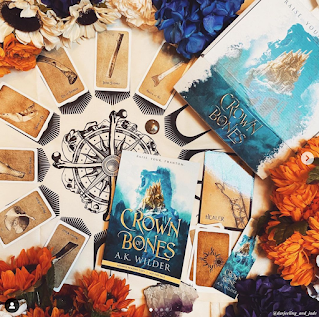
Celebration matters...

For example, authors will use festivals and special dates to situate readers in the culture of their story world. It’s a ‘picture worth a thousand words’ backdrop to the plot that lifts the spirts and animates the action. Admit it, celebrations, real or imagined, are just plain fun!

Unless, of course, you are on the outside looking in.

This outsideness happens more than we know, for a variety of reasons: different belief systems, estranged families, black sheep syndrome and other causes of isolations and disconnection. In real life, it can be crippling; in fiction though, it’s pure motivation.
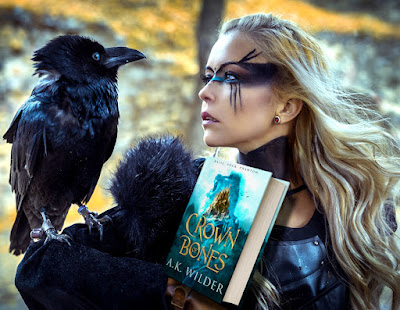
Salila in the "Amassia" series

The ‘outsider’ character comes into its own in Fantasy. There is so much to work with from a child raised by wolves, aliens or demons to the hero who can’t conform. These themes offer infinite possibilities for writers. They also offer the chance for readers to experience nonconformity, or perhaps honor times in their lives when they were very much on the outs. (Most of high school comes to mind for me.) The outsider trope can also allow readers to see exclusion turned into an asset.

A classic example of this is Aragorn from Tolkien’s LOTR. While the rest of the world dines and dances, he hangs back, watching. Protecting. Eventually, he is crowned King, but for most of the story, he is on the outside looking in.
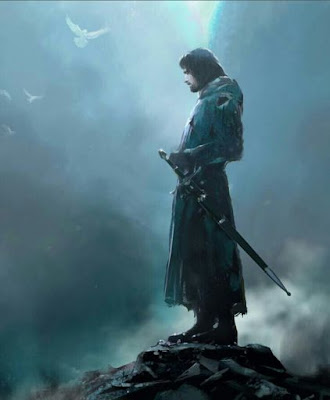
Aragorn

Sleeping Beauty is another example where the entire tale pivots around exclusion. The overlooked fairy that was not invited to the celebration arrives anyway, with a hopping mad curse. In Fantasy, exclusion can bring the gold, the development of inner gifts that otherwise wouldn’t be utilized if the hero had been accepted (or curse-free) from the start.

More than a single character, it might an entire culture that has been pushed out, as in Children of Blood and Bone by Tomi Adeyemi.

They killed my mother.
They took our magic.
They tried to bury us.

Now we rise.

There are so many other examples: Ropa in L. T. Huchu’s Library of the Dead, Raia in Sarah Beth Durst’s Race the Sands, Aria in Under the Never Sky. N. K. Jemisin's Broken Earth trilogy, Brian Naslund's Dragons of Terra series … the list goes on.

True to my genre, I utilize both celebrations and ‘outsideness’ to build a more believable world and throw characters into the deep end of the sea, literally. The hope is they swim, though there is always the risk that they won’t.

For example, Marcus, in Crown of Bones, is a conformist, on the inside, educated in the Sanctuary, heir to the throne, raiser of a warrior phantom. It seems like he has it all, until he loses his throne, is exiled and his phantom goes rogue.

Ash, on the other hand, begins the journey an outsider. She is the only non-savant with little rank and status. But the exclusions she faces make her stronger, more resilient. In Curseof Shadows, it is she who has the strength to… well, you’ll have to decide if it was all worth it...

As Rilke says:

 “…only someone who is ready for everything, who doesn't exclude any experience, even the most incomprehensible, will live the relationship with another person as something alive and will himself sound the depths of his own being.”

This holiday season, I find myself wondering how my own life story might change if I could, as Rilke describes, experience everything and exclude nothing… so much so, I am making it my New Year’s resolution.

With that, I wish you all happy reading, writing and dreaming on into 2022.

~*~

Helen Lowe: Together and Alone – Story, Magic, & Real Life

As a child, my Christmas–New Year drew on the same tradition as Amanda, with the ‘coin flip’ of being in the Southern Hemisphere, which transformed both into summer festivals. Christmas was still very much the “big” festival of the year, though, and I remember it as a magical time. Family was front and centre, and we did “all the things”: decorations, carol singing by candlelight (we had to stay up late for that, being midsummer!), special festive food – and, of course, presents!
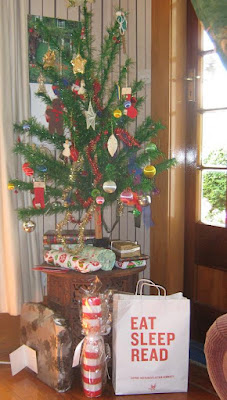
A traditional Christmas

I’m sure I’m not alone in recalling staying awake to try and witness Santa’s arrival, watching the flicker of the Christmas lights – then waking to Christmas morning and having to wait until the whole family was present for the grand unwrapping!

New Year, of course, being high summer, was always about bbqs and picnics at the beach: yelling, running, and sand with everything – equally magical in its way.

New Year at the beach

Family, community, togetherness, and the rituals of gifts, food, and storytelling, from the 2000-year-old Christmas story to the family yarns of Christmases and New Years’ past: looking back, I can see how those elements formed our season of celebration.

As a young woman, however, I experienced being Kim’s “outsider looking in.” At the time, I was living overseas, and never felt aloneness more keenly than during Christmas–New Year.

When reading Russell Janney’s The Miracle of the Bells (1946) some years later, I agreed with the narrator’s observation that, “No one but a homeless man can understand the utter loneliness of a stranger on Christmas Eve in a ‘city of homes.’”

Yet during that first Christmas alone, I was fortunate in being able to make common cause with others who were similarly circumstanced, forging our own small community of togetherness. Some did not have family or community available, for various reasons as Kim says. But many were also from other countries, often with different cultures and religions, festivals and celebrations. In getting together, we were able to share those traditions and our stories of home – and found we experienced something new, and rewarding, through our sharing of traditions, stories, and “found community.”
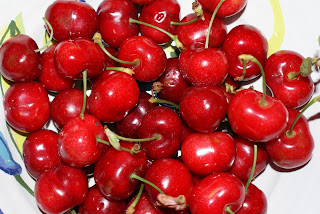
Shared traditions

In the midst of aloneness, I also found another magic – that of experiencing my first “white Christmas”, where lighting candles began early in the afternoon! I will never forget walking to my “found community” gathering as the snow started falling. I felt a little like Mr Tumnus, in fact, with my woollen scarf (only the last among many other layers!), my arms full of my “NZ festive” contributions, and snowflakes fluttering past a nearby lamppost. No umbrella, though! ;-)
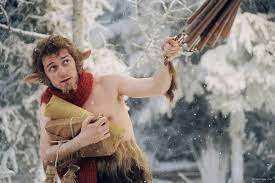
Mr Tumnus_The Lion, the Witch and the Wardrobe film

So when undertaking Fantasy worldbuilding, it’s perhaps not surprising that my mind turns to festivals and celebratory traditions, whether establishing identity and culture, as in The Heir of Night, or where characters, such as Malian and Kalan in The Gathering of the Lost, must make their way in strange lands. 

Yet as an author, I also recall how in experiencing the magic of my first winter Christmas, I recaptured the delight of my first encounter with Narnia’s fictional world. In that moment, I lived AS Byatt’s wonderful quote:

"Think of this 
 that the writer wrote alone, and the reader read alone, and they were alone with each other." 

And in my case, the midwinter night, and the streetlight, and the falling snow – yet because of that moment, I never question the value of telling stories or of reading them, in terms of remaining connected to “real life.”

So wherever you are in your story, this holiday season, I hope you’ll find a little magic to keep you company.

~*~

About The Authors:


About
Amanda Arista:

Amanda was born in Illinois, raised in Corpus Christi, and lives in Dallas, but her heart lies in London. Good thing she loves to travel!

Amanda is the author of the Diaries of an Urban Panther series and The Merci Lanard Files. A graduate of the SMU Creative Writing Program, she now teaches other aspiring authors and loves discussing craft, character, and structure.

You can usually find Amanda curled up on her couch with a varied menagerie of dogs or lizards, writing away, or otherwise on Facebook: https://www.facebook.com/pantherista/ She tweets: @pantherista

.


About
Kim Falconer:

Kim Falconer, currently writing as A K Wilder, can be found on Twitter, Facebook and Instagram.

Or pop over to throw the bones or Raise Your Phantom on the AKWilder.com site

..

.


About
Helen Lowe:

Helen Lowe is an award-winning novelist, poet, and lover of story. With four books published to date, she is currently completing the final instalment in The Wall Of Night series.

Helen posts regularly on her “…on Anything, Really” blog, monthly on the Supernatural Underground, and tweets @helenl0we.

.

.

See you all on the other side—in 2022!

Wednesday, December 15, 2021

Best Fantasy Books of 2021

Imagination through Reading Books Country Colors is a piece of digital artwork
by Debra and Dave Vanderlaan 

Hey everyone, 

Welcome to the holiday season. As the year winds down, I thought it would be fun to reflect on my favoirite reads of 2021.


No hype. No guff. 

Just straight up honest thoughts on the books that delighted me most.


To start with, you may recall my first book in the Amassia Series launched in January of 2021. For all of you who read, liked and reviewed, I am very grateful. 


Crown of Bones made several ‘best of’ lists for 2021, including Most Undervalued… which I think is good, right?

Next for me comes Sorcery of Thornes by Margaret Rogerson. I had the pleasure of listening to the audio version, narrated by the extraordinary Emily Ellet. What a treat. Rogerson’s portrayal of good and evil through the eyes of a character coming of age is refreshingly open-minded. She brings home the idea that we are never one or the other…


Blood Like Magic is right up there with my Audio Book favorites. Narrated by the very talented Joniece Abbott-Pratt, it captures a unique blend of Fantasy through a Trinidadia- Canadian lens. The voice of the characters, along with vivid worldbuilding, is grand but what I really love is the sense of generations, the connections we have to our ancestors and how they shape us. Just brilliant!


Also at the top is Sara Beth Durst’s The Bone Maker. I love how she takes epic fantasy and turns a full and glorious tale into a standalone volume. No waiting for months or years to find out what happens and yet a powerful dose of storytelling from start to finish.

 Of course, the irony is, I wish there were more! Always a wonderful writer, Durst brings to life a kind of steam-punk with bones feel. Her non-human characters absolutely capture the heart. The narration by Soneela Nankani is unstoppable.


Even a very short Best Of list is not complete without mentioning The Library of the Dead by T L Huchu. Such a wonderful read. Tinashe Warikandwa certainly adds even more with her fantastic narration.

I particularly LOVED the life of the books and realize now, as I write this, that the grimoires in Sorcery of Thorns enchanted me in much the same ways. These two books, though very different, complement each other in many ways


Well, it makes sense. I do love books….


Which of these titles have you read? Thoughts? I’d love to know what your Bet of 2021 List looks like.


See you in the comments.


xxKim 

* * *


Kim Falconer, writing YA Fantasy as A K Wilder, is the author of Crown of Bonesbook #1 in the Amassia Series. The sequel, Curse of Shadowsis due for release in June 2022.

Kim can be found on  AKWilder TwitterFacebook and Instagram

You can Throw the Bones, read your monthly horoscopes or Raise Your Phantom on the AKWilder.com site or just drop a comment to chat. See you there!

Friday, December 3, 2021

Have a Holly Jolly...Pickle?

 2021: Year of Forced Introspection

Holiday traditions are weird and only make sense when put into the context of Christmas cheer. Taken out of context, when removed from the story, they look like the ramblings of a mad man. For example, at what other time of year do we pay to take a picture of a stranger in a strange outfit holding our child.

Here in my home state of Texas, there is the Christmas Pickle tradition. You hide a small green pickle on your tree, and the first person to find it on Christmas morning gets an extra present. It's hide and go seek with pickles.

Weird, right?

Like at what time of year is it totally okay to bake a ton of cookies and give them to everyone you know, knowing that you will get a ton of cookies in return?

We are a strange race, these humans, with their stories and their weird traditions. 

But all of these things make sense when you put them into the context of Christmas, the world of Winter Solstices, and Festival of Lights. The story and the traditions all come together and glow with a meaning that we can all understand and experience. 

I find the same thing happens with great storytelling and I believe that Helen Lowe has hit upon it this beautifully  with her Fantasy World Building series. The setting of the story, the context of the story, is a vital part of the actions and characters that are participating in the story. Writers might wax poetic about world building because it is fun and exciting to create new places, new religions, new languages. And yes, that is all fun, but the real part of creating a world for a novel is its integral part to the plot and the characters. 

Like these marvelous pinwheel cookies, the three things are completely twisted together. You can't have a character without defining where that character came from. You can't build a plot without a character to act within it. And you can't have action without a world to provide obstacles to overcome. It is all perfectly swirled together into a delicious treat, baked up by your favorite author to give you a little something to take with you as you toil. 

So when you think about your traditions this holiday season, please appreciate the story of it, the context, the players and the plot and how they are all spun together to make this the most wonderful time of the year. 

Until next time, dear readers. Happy Holidays and see you next year!

Amanda Arista

www.amandaarista.com

Author, Diaries of an Urban Panther Series and The Merci Lanard Files. 


Wednesday, December 1, 2021

Magic in Fantasy #12: "The Wall of Night" Series

 .

Well, here we are: together we've reached No. 12 in this year's post series on Magic in Fantasy fiction.

I've had a pretty good time with it, both the author interviews in the first half of the year, and my reflections on a range of books in the second. So I hope you have as well, on the reading side of the blog. :-)

If you want to look back or see what's come before, a compleat list is included at the end of this post.

It's by no means a complete exploration of the wondrous arrays of magics and magic systems that characterize the fantasy genre  – but that, dear readers, would be the work of at least a decade, if not a lifetime, rather than my twelve-month span.

So to wrap up the year, I'm going to look at the magic in my own The Wall Of Night series. 


.

Magic in Fantasy #12: "The Wall of Night" Series

When Robin Hobb provided a cover quote for The Heir Of Night, (The WALL OF NIGHT (Book One)  she affirmed “A richly told tale of strange magic…” 


That focus felt right, because although for me, to be Fantasy there must be at least a glimmering of magic – but the Wall of Night series is absolutely full of magic, and some of it is exceedingly strange indeed.

I’m not sure it qualifies as a “system” in the Brandon Sanderson sense of the word, or even so much as in Courtney Schafer’s Shattered Sigil series. (Read the interview with Courtney from earlier this year.)

Shattered Sigil, Book 3

The magic of the Wall of Night universe is chaotic, natural, and diverse. There may, however, be some method in the magic, so let’s take a closer look.


The Magic Of The Derai

Firstly, there’s the magic of the Derai Alliance and their ancient enemy the Swarm, both of whom are alien to the world of Haarth, where they now find themselves. The magic of the Derai falls into four main areas: 

  • The Golden Fire, which comprised living entities, but was also a power source. At the time the story opens, the Golden Fire is believed extinguished; 
  • The Blood: those Derai that are both strongest in magic and traditionally most closely aligned with the Golden Fire;
  • Dream magic, comprising prophetic visions as well as manipulation of the dream plane; and 
  • The Magic of the Gods, which chiefly manifests through prophecy and artifacts, such as the three divinely-wrought weapons of the Derai’s greatest hero.


The magic of the Blood and the Derai’s lesser adepts covers a range of forms, including the ability to command objects and forces, both natural and physical; understanding the speech of beasts and birds; acute eyesight and hearing, including seeing in the dark and hearing outside normal human range; the chameleon ability to blend into surrounding materials and elements; prophetic dreaming; an empathic spirit bond; farseeing and foreseeing; fire calling; illusion working; mindspeaking; mind- and spiritwalking; psychic shielding; prophecy; seeking; truthsaying; and weatherworking.

Plus a few more! The unifying element, despite their chaotic diversity, is that all magic is grounded in the individual, like any other skill or talent. So an important limitation is the user’s physical endurance and psychic strength. Traditionally that limitation was enhanced by the bond to the Golden Fire, so the loss of the Fire represents a major reduction in the power of the Derai.


Dream Magic

Dream magic merits a section in its own right, because it is a form practiced by Derai adepts through sleeping dreams and waking visions. It is also used to access the Gate of Dreams, which is a realm-of-being in its own right, while offering access to other planes of existence. As is the way with dreams, the workings of this realm are frequently chaotic, jumbled, and mysterious, but can be clear as well.


The Gate of Dreams is also closely associated with portent. Truth may be discerned here, but it is equally likely that foretelling may only imperfectly reflect events in the waking or “daylight” world. Nothing is certain – and every action a protagonist takes acts on the dream realm, creating alternative possibilities for a dream or vision's fulfillment.

To further compound the mystery, the Gate of Dreams has its own denizens, including a long-dead hero who has been promised that her successor will not have to stand alone; the Huntmaster, who may not be more powerful than the hero, but is “older…and much, much darker”; and a ghost that guards a cavern of sleepers and holds the key to a millennia-old riddle. 


The Magic of Haarth

One of the interesting elements of The Wall of Night series is that the Derai and their archenemy, the Swarm, have long been the only players in the magic game. Until now, on the world of Haarth, which they are discovering has magic of its own... 


The story’s main protagonists, Malian and Kalan, are Derai, and only beginning to discover the magic of Haarth. What they have learned is that some elements are similar to their own powers: for example, Haarth magicians can access the Gate of Dreams. There is a deeper magic, however, which is tied to the world itself – what Malian calls a green magic and thinks of as the Song of Haarth. She is even beginning to suspect that the world itself may be sentient, although that is not yet certain.

This deeper magic also weaves together the magic of the natural world with the power of the three gods of Haarth – a magic that can take older, darker forms, such as the demons that walk during the dark of the moon, or the blood magic practiced in the land of Jhaine.
.


Conclusion

So there you have it: gods and ghosts and heroes; dream realms and blood and artifacts of power; mystery, mythology and more than a hint of chaos. I suspect that does add up to Robin Hobb’s “strange magic”, but with enough method in the mix to qualify as a magic system. :-)

~*~

Previous Posts In The “Magic In Fantasy” Year:

January 1: Happy New Year – Ushering In A Year of Friends, Fellow Authors, & Magic Systems

January 5: An Interview with AK Wilder – Talking Magic In Her New-Out Crown Of Bones (AMASSIA #1)

February 1: An Interview with T Frohock – Talking Magic In A Song With Teeth & The LOS NEFILIM Series

March 1: An Interview with Courtney Schafer – Talking Magic In The "Shattered Sigil" Series

April 1: An Interview with Kristin Cashore –Talking Magic In Winterkeep & The "Graceling Realm" Series
.
May 1: An Interview With Lee Murray – Talking Magic, the Supernatural & Horror

June 1: An Interview With Amanda Arista – Talking Magic In the MERCI LANARD & DIARIES OF AN URBAN PANTHER Series

July 1: The Magic of Magic In Fantasy -- & A Solstice Shift

August 1: More Magic In Fantasy: Lighting The Spark

October 1: The Magic of SF-nal Worlds

November 1: The Magic Next Door

~*~

About The Author:

Helen Lowe's first  novel, Thornspell (Knopf), was published to critical praise in 2008. The second,The Heir of Night (The Wall Of Night Series, Book One) won the Gemmell Morningstar Award 2012, and the sequel, The Gathering Of The Lost, was shortlisted for the Gemmell Legend Award in 2013. Daughter Of Blood (Book Three), was published in 2016 and Helen is currently completing the final novel in the series. She posts regularly on her “…on Anything, Really” blog, monthly on the Supernatural Underground, and tweets @helenl0we