Monday, March 15, 2021

Characters from Scratch?


A Complete Guide to Special Effects Makeup

Creating the characters for Crown of Bones was like the birth of Athene. They leapt straight out of my head, fully formed, screaming a war cry. 

Moments later, they took over the page, expanding their roles and behaved in ways I couldn't control. More than once, I found myself saying, "Really? You're doing that?"

Crazy, I know, but I have come to believe that characters, and the stories themselves, all exist before we can even imagine them...

Salila

Zena Holloway Underwater Photography
Salila was the first to be born, full of wit, snark and hunger. She’s my current answer to Margaret Atwood’s question, "Is it somehow ‘unfeminist’ to depict a woman behaving badly?"

Not in the slightest...

Ash

Ash came more gracefully, with more compassion and patience. And with her was born an inner voice, an entity she talks with mind to mind. That was a shock. It took me time to realize the depth of this side of her nature, how it got there, and how it could be set free.

Marcus

The most challenging of my characters was Marcus. At first, I thought he was all the unanswered questions I had about my own brother, his life and his death...

But then Marcus and his phantom morphed into their own, distinct personalities and I forgot my preconceived ideas and listened to theirs.

Bone Throwers

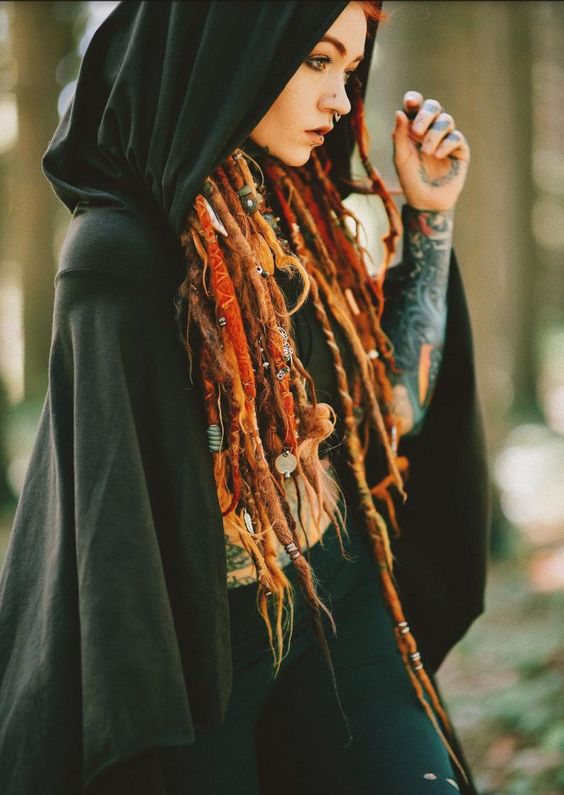
Elven Forest Festival

Well, they were easy. I've trafficked in fate for most of my life. Bones, cards, planets and stars. It's all one...

Phantoms

The most delightful creatures to unearth were the phantoms, those projections of their savants' unconscious taking solid form. I adore their mystery, strength, and humour. If only we could all raise our phantoms as effortlessly as, say Piper or Samsen.

Of Kaylin and Ash
Jamesdesign1 DeviantArt

Kaylin

Of course, when it came to Kaylin, he was pure wish fulfilment. That sailor is everything I ever dreamed of, and more. I wish I knew the road to Tutapa so I could find him in RL! 

Please tell me about your favourite characters. Have you ever asked an author how they came to life? I'd love to hear about it!

* * *

Kim Falconer, currently writing as A K Wilder, has just released Crown of Bones, a YA Epic Fantasy.


She can be found on  AKWilder Twitter, Facebook and Instagram. 


Throw the bones, read your horoscopes or Raise Your Phantom on the AKWilder.com site or have a listen to the Audio version below.

Crown of Bones audio sample
Try the Audio Sample


Monday, March 1, 2021

An Interview With Courtney Schafer – Talking Magic In The "Shattered Sigil" Series

 .

Introduction:


Over the past few years I’ve taken a leaf out of fellow Supernatural Underground (SU) author
Amanda Arista’s book and adopted a blogging theme for the year. This year, my theme is Magic Systems in Fantasy – and wherever possible, I hope to talk with a fellow author about the magic systems in their work.

When I first read friend and fellow author,
Courtney Schafer’s debut Shattered Sigil series I was really impressed by both the worldbuilding and the way the magic systems were front and center of the story. In particular, I was impressed by the depth and intricacy of the magic (without it seeming in any way convoluted) and the way in which Courtney's magic systems bound the world, the narrative, and the characters into a cohesive whole.

All of which is why I’m delighted to be chatting with friend and fellow author,
Courtney Schafer, today.


The magical city of Ninavel
Credit: Andreas Rocha


Welcoming Courtney Schafer:

In Conversation On Magic Systems
in the “Shattered Sigil” Series


HL:  Hi Courtney, welcome to Supernatural Underground and the Magic Systems in Fantasy series. J


I’ve always admired the magic systems in your
Shattered Sigil series, which I feel are relatively complex, with magical diversity within cities, but also within nations and realms of being. So did you spend considerable time thinking through the magic and how it would work before you began writing, or did it evolve as you wrote the story?


Shattered Sigil #1

CS:  Hello, and thank you so much for inviting me! I do love magic in fantasy, so it’s always fun to geek out about magic systems and how they influence and enrich a story. I know some writers start by working out the magic first and deciding on characters and plot to suit the world they’ve built, but I always start with the characters and build the magic as I figure out what makes my protagonists tick and what problems I want them to face in the story.

For the
Shattered Sigil books, I knew I wanted two protagonists, because I love stories about initially reluctant friendships that grow into unbreakable bonds. I wanted my two guys to be very different people at the start, with different backgrounds and experiences of magic, because I thought that would be fun to explore in the story.

So, before I set words to page, I had worked out the basics of the blood magic that my mage protagonist Kiran was trained to cast, and my mountain climber protagonist Dev’s history of losing his childhood telekinetic talent, because those are vital pieces of who they are as people. But the rest of the details, and the variety of magic in the world, and how different cultural attitudes to magic impact the society and politics—that, I worked out as I wrote. (I find it more fun to work out some things along the way!)

I did know right off that I wanted the world to have a whole range of magic styles, though. As an engineer, I’ve seen how people come up with a huge variety of ways to use existing tools and solve problems. I felt that same range of creativity and different styles of thinking would apply to magic also.


HL:  As well as admiring the depth of the overall magic system you’ve developed, I also feel it’s the net that binds much of the Shattered Sigil story together. Clearly, Kiran and Dev are key, as the main characters, but are there other threads you consider vital?

Shattered Sigil #2


CS:  For me, a lot of the story is about trust—when to give it, what happens when trust is abused and broken, and how to heal from the wounds. So, a lot of the magic reflects that, especially my version of blood magic, in which the mages must cast in pairs—one to channel and control the magic, the other to wield it. To successfully cast together, blood mages must share a deep mental linkage, which requires a vulnerability and level of emotional connection somewhat at odds with their willingness to kill and torture to raise the power they need. The contrast is the fascinating part to explore! And of course, the trust required between blood mages in order to cast is the dark mirror of the trust between climbing partners, who likewise must put their lives in each other’s hands. It was fun to play with the similarities.

It’s also not just the blood magic that I designed to explore questions of trust. In the country of Alathia, where law and order and safety are valued and blood magic is outlawed, mages don’t put their faith in individuals, but are conditioned to put all their trust in their government. That’s a whole other kettle of worms!


HL: I can well imagine—and in fact, the contrast between the mages of Alathia, and the far more anarchic environment of Ninavel was part of what I loved about your magic system. Given these differences, was there any one magic system, or elements within a magic system, that you particularly enjoyed writing, and why? Or correspondingly found more difficult or challenging than the others?


CS:  Okay, I admit I enjoyed writing the blood magic—not the torture part, but exploring the contrast mentioned in my answer above. How can people who genuinely consider themselves loving partners and devoted to their families commit atrocities on a daily basis? If you’ve been raised in such a system of belief, how do you break free and forge your own path? I guess because those are questions that deeply interested me, it made those scenes easy to write.

I found it more challenging to write the Alathian side of things, in part because Alathian mages cast in groups, so their scenes are always more complex due to more characters to juggle. I don’t know about other writers, but for me, the difficulty of writing a scene goes up exponentially with the number of characters involved.


Shattered Sigil #3

HL:  I absolutely agree about a correlation between numbers of characters and difficulties of writing! You’ve alluded to the family underpinning to blood magic, and in the case of your main blood-mage characters, it’s a “found family” relationship. Can you tell me more about that?


CS:  Well, blood magic as defined in my world does have to be cast in pairs, but I think my villains Ruslan and Lizaveta’s particular success as blood mages lies in their devotion to each other, which made their partnership so long-lasting and powerful. I’m actually writing a short story that covers the time when they first met as apprentices, and how Ruslan convinced Lizaveta he’d make a great partner (it wasn’t easy for him).

You don’t hear about many other blood mages in the
Shattered Sigil books precisely because it’s difficult for powerful mages trained in a dark, violent style of magic to maintain that depth of bond. And the expansion of the partnership to be a full-fledged family was all Ruslan’s idea; as shown in the short story “A Game of Mages” that I wrote for the Evil is a Matter of Perspective anthology, Lizaveta would’ve been fine without adding children to the mix.


HL:  The Shattered Sigil world is shaped by the mountains and deserts of America’s western landscapes, including by the mountain climbing you’ve done there. Did these landscapes also shape the magic systems in any way?


Grimdark Magazine, 2017

CS:  I suppose I was thinking about geological forces to some extent when I decided the city of Ninavel was founded on a magical confluence. The Owens Valley of California is the particular location that inspired the geography of Ninavel’s environs; the valley is one of the deepest in the world, a fault block basin with the desert floor dropped down relative to the two massive snowcapped mountain ranges on either side. If you visit the valley, you can see plenty of evidence of old lava flows, including a nifty spot where a now-vanished river carved a canyon through black basalt. So when I thought of a magical confluence underlying my imaginary city, I was to some extent imagining magic pooling as lava does in a magma chamber.


HL:  Both the natural environment and the flow-on into your magic system sound equally fascinating. Did your ideas on, and approach to, writing magic systems alter as a result of writing the Shattered Sigil trilogy? How is it likely to influence new work?


CS:  Hmmm. I don’t think so, but perhaps this is the kind of thing it’s only possible to evaluate in hindsight, after the new work is complete. I feel like I’m using a fairly similar process for my new novel The Dreaming Sea. I started with the protagonist and geographic setting (coral reefs and atolls this time!), and I’ve been designing the magic around what aspects of character I most want to explore, with both magic and world getting richer and deeper as I go. This time my protagonist will have to learn an alien magic that no other human has ever wielded, so she has quite the challenge figuring it out, especially since the magic is far from safe to use. It’s different than any of the magic I created for the Shattered Sigil books, but so far it’s equally fun to write.  


Shattered Sigil Map #1 – showing
Ninavel & Alathia
Credit: Curtis Craddock

HL: I’m really thrilled there is a new Courtney Schafer novel on the way! Thank you so much for dropping into the Supernatural Underground today, Courtney, and sharing the magic and depth of your Shattered Sigil world – a series that really does offer so much for readers to experience and enjoy.


To find out more about the Shattered Sigil series, please visit Courtney on her website: courtneyschafer.com

 ~*~

About Courtney Schafer:

Courtney Schafer grew up reading Diana Wynne Jones and Patricia McKillip, and her love of fantasy has only expanded with age. A voracious reader, she took up writing when she found that fantasy books weren't published fast enough to satisfy her craving for new worlds full of magic and wonder. Her Shattered Sigil trilogy (The Whitefire Crossing, The Tainted City, The Labyrinth of Flame) is a tale of blood magic, murder, and mountaineering featuring a sardonic young smuggler and a runaway apprentice who form a reluctant but enduring friendship when they are caught up in a dark game of intrigue between rival mages. Visit her at Courtney-schafer.blogspot.com or on twitter (@cischafer).

---

Rocking 2021 with “Magic Systems in Fantasy” on Supernatural Underground: Previous Posts 

January 1: 
Happy New Year – Ushering In A Year of Friends, Fellow Authors, & Magic Systems

January 5: 
An Interview with AK Wilder – Talking Magic In Her New-Out Crown Of Bones (AMASSIA #1) 

February 1: An Interview with T Frohock 
– Talking Magic In A Song With Teeth & The LOS NEFILIM Series


~*~

About The Interviewer:

Helen Lowe's first  novel, Thornspell (Knopf), was published to critical praise in 2008. The second,The Heir of Night (The Wall Of Night Series, Book One) won the Gemmell Morningstar Award 2012, and the sequel, The Gathering Of The Lost, was shortlisted for the Gemmell Legend Award in 2013. Daughter Of Blood (Book Three), was published in 2016 and Helen is currently completing the final novel in the series. She posts regularly on her “…on Anything, Really” blog, monthly on the Supernatural Underground, and tweets @helenl0we

Tuesday, February 16, 2021

The Quirky Magic of Book Journaling


Brittybook on Instagram and Goodreads

As we embrace the Lunar New Year of the Ox (check your horoscopes here), it might be time to do something that is both creative and practical, fun and therapeutic. I'm talking about starting a book journal, or #bujo for short.

Jessie Reads Too Much Instagram & Blog

Why a Book Journal

Book Journals can:

1. Encourage you to read more, and that is healthy for you and everyone around you.

2. Activate your imagination through engagement with books 

3. Allow for more creative flow

4. Help organize your thoughts

5. Become life journals reflecting personal growth and insights

6. Get your writing more

7. Structure key thoughts for detailed book reviews

8. Offer a therapeutic process for recording your feelings and experiences

9. Keep favorite characters alive in your heart, also very good for your health. (Read more about social surrogacy and parasocial relationships with fictional characters.)

Brittybook on Instagram and Goodreads

Starting a Book Journal

Are you convinced to start one yet? All you need is a notebook, pens, paste and possibly a printer, tape and glue. 

Here is an inspiring YouTube Vid on getting started: 2021 Reading Journal Setup | Plantmas Day 10.

You can use a plain notebook, or go for something more like a leatherbound dream journal. It's up to you, but if you want to use watercolours, sumie inks or other more potent materials, make sure your pages can stand up to it.

You also might want to print cover images, quotes and reviews, author images and tips from websites to bring in a collage effect.

Mochibujo's TBR page in her 2021 book journal
Mochibujo TBR Page 2021

For Readers and Writers

Book Journaling content doesn't have to be confined to books you read and want to review. As mentioned above, the #bujo ('bullet journal' as tagged on Instagram and Twitter) can be a life journal filled with inspirations, visions, tarot spreads, dreams of note and import, quotes and fresh ideas.

The #bujo may even become your grimoire with spells, recipes, herbs, moon guides, manifesting techniques and wisdom gained from higher guidance. In essence, your book journal becomes a part of you, a collaboration with the Muse to acknowledge and honor the experiences of life, large and small, fictional and real.

Reading Journal Setup - 2021

If you have already begun your book journal for 2021, let me know. I'd love some tips and trick or just plain old encouragement as I begin this multimedia journey.

If you haven't considered it, I hope you do.

See you in the pages.

xxKim

* * * 

Kim Falconer, currently writing as A K Wilder, has just released Crown of Bones, a YA Epic Fantasy.


She can be found on  Twitter, Facebook and Instagram. 


Throw the bones or Raise Your Phantom on the AKWilder.com site


Sunday, January 31, 2021

An Interview With T Frohock – Talking Magic in "A Song With Teeth" & The LOS NEFILIM Series

.

This year, I’m focusing on magic systems in Fantasy – and wherever possible, I hope to do so by talking with a fellow author about the magic systems in their work.

Today I'm really pleased to welcome TeresaFrohock to discuss the magic systems in the world of her LOS NEFILIM series. In particular, we'll be talking A Song With Teeth, the final book in her current series, which is due out on February 9.

At which point I really must pause to vigorously deploy my fan, breathless with excitement.
J By which you may deduce that I am a keen LOS NEFILIM reader, aka a fan!

Background

By way of background for those who may not be as familiar with the storyline as I am, it is set in 1930s Spain, and Europe, during and after the Spanish Civil War. The preceding novel, Carved From Stone and Dream, is set on the cusp of World War 2 (WW2), and A Song With Teeth, the third and final novel takes place during the latter war.
.
Overlapping the human story of these tumultuous times is a paranormal conflict in which angels and demons war on the human plane. The nephilim (in Spanish, Los Nefilim) are the foot soldiers and frontline troops in their war. Inevitably, the conflict spills over into human politics and concerns, and also reflects them, with nefilim (I shall use the story’s Spanish spelling from this point) on opposing sides in Spain’s civil war and WW2.


Welcoming T Frohock: In Conversation On Magic Systems In A Song With Teeth (LOS NEFILIM #3)

.
HL:  Congratulations, Teresa, on the imminent release of A Song With Teeth. I imagine it feels like a considerable achievement to see the culmination of a storyline encompassing both this LOS NEFILIM series and the earlier novella trilogy?
.

TF:  Thank you! It really did. This is actually the first trilogy [tetralogy, if you count the Los Nefilim omnibus] that I’ve had the opportunity to complete for a publisher, so it’s a milestone for me. I enjoyed the ability to follow Diago’s character arc to completion, and I was very satisfied with where the story ended in both terms of plot and characterization.

.
HL:  How do you feel the magic within LOS NEFILIM influences and shapes the world and the story?
.

TF: For those who haven’t read the series, the nefilim work their magic through music, light, and movement by creating sigils. They experience sound accompanied by color—a form of chromesthesia—that enables them to use the vibrations of color to shape their sigils, which manifest their willpower into reality.

For example: if a nefil wants to influence the weather, they design a sigil—a magical symbol—that will cause rain. Then they compose the necessary tonal sounds that reflect the strength of the storm they want, and then, as the song unfolds, they use their hands to shape the colors of those sounds into the sigil. The final step is to push the sigil into the clouds.

The world the nefilim inhabit is the very real world of the early twentieth century, so their magic is quite often dependent on the science and music of the period. As they learn new things, they incorporate this knowledge into spells. A good example is Carme’s fascination with the Devil’s Fingers [Clathrus archeri], a type of fungus that she mimics with a very nasty spell that she inflicts on her enemies.

Since the nefilim spend a lot of time together, they also perform together with informal arrangements that deepen their camaraderie. Music isn’t just their way of working magic; it’s also how they relax and form bonds with one another.

When they first meet, often they play for one another. This is a way in which they can see the other nefil’s song, or their soul. They judge one another by the tonal quality of their voices and the complexity of their compositions, including their ability to play instruments.

Although their music plays an important part within their magic, they rely more on their cunning and their ability to manipulate mortals than they do magic. They navigate a treacherous world that can turn on them in a heartbeat, and they know that as the twentieth century moves forward, scientists would love to study the nefilim’s near immortality in addition to their ability to influence events.

Because they distrust mortals, the nefilim spend more time trying to stay hidden from a sense of self-preservation. They move in plain sight, but they keep their magic quiet unless threatened
.


HL: “Music” is the key word I associate with the LOS NEFILIM magic system, but given the intricacy of the magic system you’ve just described, are there deeper layers that go beyond music alone?
.

TF: It’s a complex process that relies on physical gestures, as well. Music enables the nefilim to transpose sound into emotion, which is a big component of their magic, but they also have to form the sigils that manifest their will, so it’s as much akin to dance as it is to music.

In A Song with Teeth, Diago notes a young nefil’s magic, which is inadequate because even through the nefil
“understood both technique and style—the accents landed in all the right places, the chords were precise—but the cellist’s execution seemed to lack spirit and emotion, which left the interpretation flat.” In spite of his knowledge of structure and technique, the young nefil can’t convey the necessary emotive chords necessary to work his magic.

This is why older nefilim are much more dangerous than younger ones. Older nefilim have had centuries to design a full repertoire of sigils and sounds and have perfected their techniques. They have a wealth of personal experiences to draw from, and their movements are lightning fast, while younger nefilim, especially those in their firstborn lives, are still having to think their way through their spells.

Magic is never easy. If it was, anyone could do it.


.
HL: The main character, Diago, and his magic, are unique among the nefilim. Why is that? Is it important to the resolution in A SONG WITH TEETH?
.

TF:  One aspect to the nefilim’s magic that I haven’t discussed is their distinctive vocal ranges. The angels in the Los Nefilim series have three sets of vocal cords, which allows them to manipulate sound in unique ways. As the children of angels, the nefilim are also able to produce exceptional range with their voices (think of someone like Freddie Mercury or Annie Lennox).

The angel-born nefilim (those born of an angelic parent and a nefil with angelic lineage) have exceptional range in the tonal expressions. The daimon-born, on the other hand, are better skilled at the interpretation of pieces.

Diago is unique in that his mother was an angel and his father was a daimon-born nefil. It was a rare coupling that had never been replicated until an angel manipulates Diago into the sexual relationship that produces Rafael.

Whereas Rafael is one-quarter daimon, Diago is half, which makes him the best of both worlds. His unique tonal range, along with his ability to interpret a piece of music with deadly precision, enable him to compose and work with music far beyond the range of any nefil who is merely angelic or daimonic.

He is able to drift between two distinct cultures and bring what is best to both in the nature of his personal song. His son, Rafael, accidentally discovers the secret to his father’s magic in
A Song With Teeth, and that revelation gives him a deeper understanding of both his own song and that of his father.

.
HL: Family, both born and found, is central to the main characters and the LOS NEFILIM story. Does this shape the magic system in any way?
.

TF:  In many ways, yes. The angels want to breed the perfect soldiers, and in doing so, they create nefilim with unique songs. Likewise, so do the daimons. Whoever wins their war wins control of the mortal realm.

The thing to remember is that to be chosen to parent a nefil born of their respective gods (be it angel or a daimon) is considered to be a great honor among the nefilim. Diago’s case is different, because his son’s angelic mother chose to deceive Diago and used her enchantments to rape him. She never intended to give Rafael to either the daimons or to Diago. It was only when she lost complete control of the situation that she was able to hide Rafael and get word to Diago of their son’s whereabouts.

Rather than reject his son, Diago chose to keep Rafael from his abusive daimonic family by acknowledging him and making a place for him in his home and heart. Diago’s husband, Miquel, fully supported this decision. In order to secure his son’s future, Diago joins Los Nefilim. Here, he finally finds the love and esteem that had eluded him with his daimonic kin. He is a part of a unit that respects his individuality and skills. They accept him as a person, something his daimonic family never gave him.

At the same time, the small family of Guillermo, the leader of Los Nefilim, is tight. His daughter, Ysabel, benefits greatly by the presence of her angelic mother, Juanita, who chose to remain on the mortal plane with both Guillermo and Ysabel (not all angelic parents remain in the mortal realm with their off-spring). Together, they nurture Ysabel, enabling her to grow into a strong, confident young woman.

I didn’t want the stories to indicate that either blood relations or found families were superior. The important thing is the respect and encouragement they give to one another. That is where they draw their strength.
 

.
HL: Are there any significant new developments readers should look for in the magic of A Song With Teeth?.
.

TF:  I believe A Song with Teeth probably has more magic in it than all the other books combined. We get to see the daimonic courts in action and experience some of their magic. More important, we get a glimpse of Ysabel and Rafael as young adults, which is something I had a great deal of fun writing.
The best part, for me, was that I was able to resolve all the tiny little threads that spun from the novellas through the novels. I left them all in a good place, and that was important to me, too. You never know what will happen next. I’ve got a few shorts planned for this upcoming year, and we may eventually see them all again one day … until then, watch for them.

.
HL: Teresa, I definitely shall! By the way, may I say how much I love that catchphrase “Watch for me”? It’s so evocative in itself, but also of the ongoing story. Thank you so much, too, for doing the interview today. I thought I knew the magic system of LOS NEFILIM pretty well but you’ve definitely added more depth – and no question, I shall be eagerly watching for
A Song With Teeth on February 9.

.

To find out more about A Song With Teeth and LOS NEFILIM, please visit Teresa's website or her publisher's site:
HarperVoyager –
A Song With Teeth 
They'll point you to where the book is available!


~*~

About T Frohock

T. Frohock has turned a love of history and dark fantasy into tales of deliciously creepy fiction. A real-life cyborg, T. has a cochlear ear implant meaning she can switch you on or off with the flick of a switch. Make of that what you will. She currently lives in North Carolina where she has long been accused of telling stories, a southern colloquialism for lying.

You can find T. on her website,
here and on Twitter: @T_Frohock


.
Rocking 2021 with “Magic Systems in Fantasy” on Supernatural Underground: Previous Posts
 

January 1:
Happy New Year – Ushering In A Year of Friends, Fellow Authors, & Magic Systems

January 2:
An Interview with AK Wilder – Talking Magic In Her New-Out Crown Of Bones (AMASSIA#1)


~*~

About The Interviewer:

Helen Lowe's first  novel, Thornspell (Knopf), was published to critical praise in 2008. The second,The Heir of Night (The Wall Of Night Series, Book One) won the Gemmell Morningstar Award 2012, and the sequel, The Gathering Of The Lost, was shortlisted for the Gemmell Legend Award in 2013. Daughter Of Blood (Book Three), was published in 2016 and Helen is currently completing the final novel in the series. She posts regularly on her “…on Anything, Really” blog, monthly on the Supernatural Underground, and tweets @helenl0we